
Ohio Recent Arrests Across the State
No statewide database holds every county jail booking in Ohio. The Ohio Department of Public Safety and the Ohio State Highway Patrol publish enforcement news, data, and operational reports. Neither one runs a county-jail roster for the whole state. So the practical path starts with the agency that made the arrest. It then moves to the facility that took custody. A city officer, a deputy, or a trooper can arrest a person. A different agency may book and hold them.
That split defines what recent means. A current-custody roster shows only people still held when the page refreshes. A dated blotter or press release may cover several days, yet list only selected events. Some agencies post a search form. Others post a short news item, a mobile app, or nothing at all. A missing name on one page does not rule out an arrest. The person may have been cited and released. They may also have been transferred, booked under a different name form, or held by a regional jail serving several counties.
Statewide enforcement news moves on its own schedule. The Ohio State Highway Patrol release on an impaired-driving campaign reports one selected enforcement result. It is not a live list of bookings.
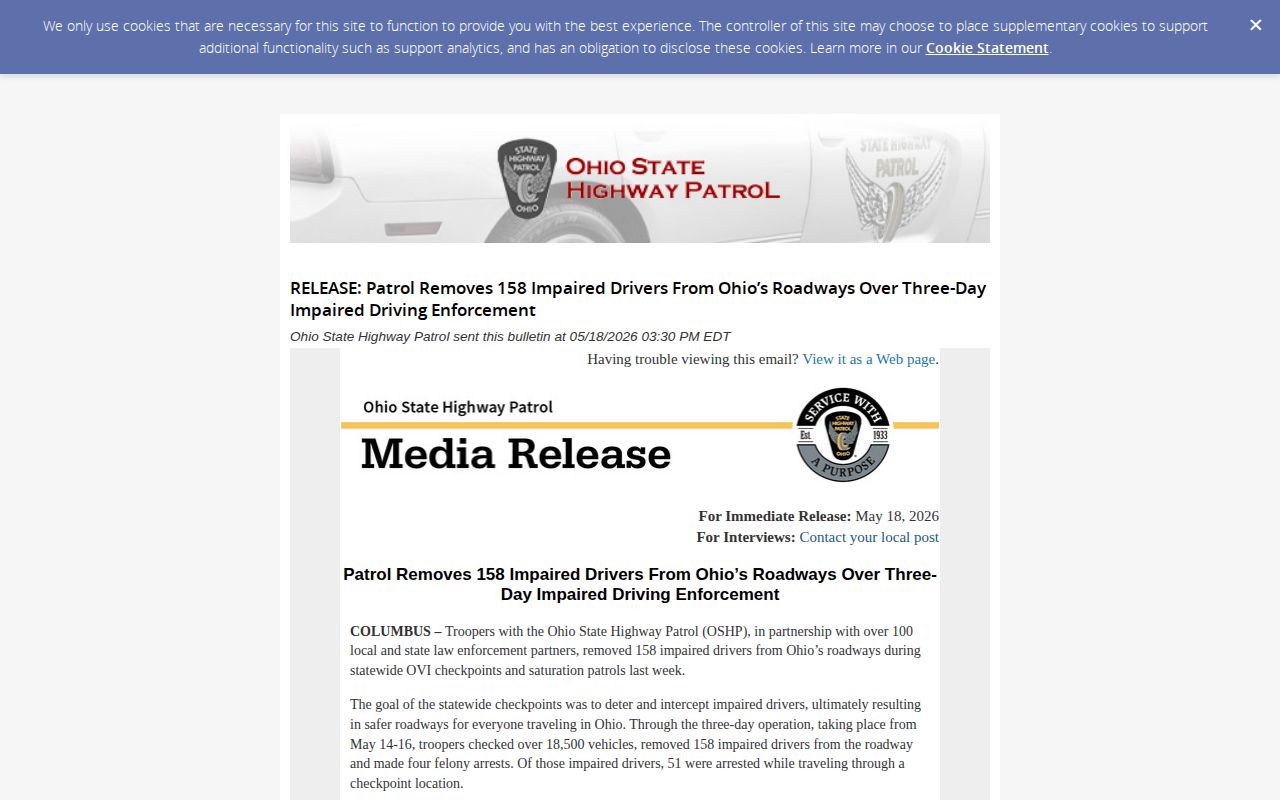
A release like that is good for context. It cannot replace a county booking search for one person, because the arrest record sits with the jail that took custody. Read the release for agency activity, then check the local roster for the name.
Ohio County and Regional Jail Routing
Search by the facility that holds the person, not just the agency that made the arrest. That single habit prevents most dead ends. A regional jail can serve several counties at once. So a name may surface in one facility's roster even though a different county filed the charge. Labels differ for another reason too. Police releases tend to name the arresting department, while the jail roster names its own facility. Keep both labels when you ask for the record.
When the destination is unknown, start with the arresting police department or sheriff. Ask three things. Which jail received the person? Was the person booked, or cited and released? Which records office holds the report? Then pick the county in the Ohio County Directory for local coverage. The local county site can point to its own roster and city pages. Still, no statewide index can replace a source's direct result or a custodian's response.
OSHP works the same way through a handoff. A trooper's arrest can land a person in a county jail, a regional jail, a municipal facility, or with another lawful custodian. A citation and release, a medical transfer, or another agency's hold can each create a different path. A patrol bulletin may describe the event while the booking record sits elsewhere. Never assume the office that wrote the arrest report also holds the booking entry.
Note: Record both the arresting agency and booking facility when contacting a records office, especially when a regional jail serves several counties.
How to Find Recent Ohio Arrests
Begin where the arrest happened, but don't assume that's the booking location. A municipal police department can make the arrest. It can then take the person to a county or regional jail. OSHP enforcement news may confirm a publicized operation. Yet the booking record usually sits with the jail that received the person. Follow each source's own county and facility labels. A regional system can list people held for neighboring counties. For a first check, use this order and keep those labels in view:
- Identify the county or regional facility that may have accepted custody. If the arresting agency is known, ask it where the person was taken.
- Open the custodian’s official roster or inmate inquiry. Search by name and, if known, booking or subject number. Read the result’s booking date, status, and update time.
- If the name is absent, check dated media releases or an official blotter. Those sources may cover arrests after release, but they can be selective and may not list every booking.
- Contact the records custodian for a booking entry, arrest report, photo, or release record that is not shown online. Ask the court for the case outcome.
Ohio's two statewide window pages explain a basic difference. One gives a same-day view. The other works as a multi-day blotter. Neither view is one statewide count. Both fall short when a local agency does not publish its feed.
Q: Does no roster result mean no arrest? No. The person may have been released, transferred, or cited without booking. A different name format may also hide the entry. Ask the arresting agency or the booking custodian before drawing a conclusion.
Arrest Feeds and Ohio Time Windows
Ohio counties handle arrest data in very different ways. Some systems show who is in custody right now. Others let visitors search recent booking entries. A few counties rely on media releases and skip the searchable roster entirely. One more wrinkle: a vendor's "run time" marks when the data view refreshed, not when the actual arrest happened. So treat the statewide patterns here as a map of source types, not a promise that every Ohio county offers each one.
| Source pattern | What it can show | Limit to check |
|---|---|---|
| Current custody or same-day view | People listed as held, with name, number, booking date, or facility fields that vary. | People released or transferred may no longer appear; the view may not cover a full day. |
| Vendor roster with a time stamp | Roster fields and a visible update or run time. | A time stamp does not define a strict 24-hour booking window or a statewide total. |
| Regional jail search | People held by a facility serving more than one county. | Booking facility and charging county can differ; read the county and court fields. |
| Dated sheriff or police release | Selected arrest, enforcement, or incident news, sometimes posted the same day or later. | It is an agency-selected report, not a complete booking feed. |
| Multi-day blotter or archive | Older entries, daily summaries, or reports beyond current custody. | Publication date and event date can differ; archives may have gaps or edits. |
In the county research, public visibility ranges from vendor searches to sheriff news posts, mobile-app notices, and request-only records. Larger counties can have separate sheriff, municipal, court, and regional sources. Smaller counties may have a less frequent release or no public web roster in the reviewed materials. Wood County’s P2C catalog, for example, shows how a search tool can extend beyond the newest entry, while its posting process can lag on weekends. That is a county example, not a statewide schedule.
Dated newspapers and police blotters can add context beyond a current-custody view. The Athens area’s The Post crime and cops section is an example of a regional news archive that has carried dated sheriff blotter summaries.
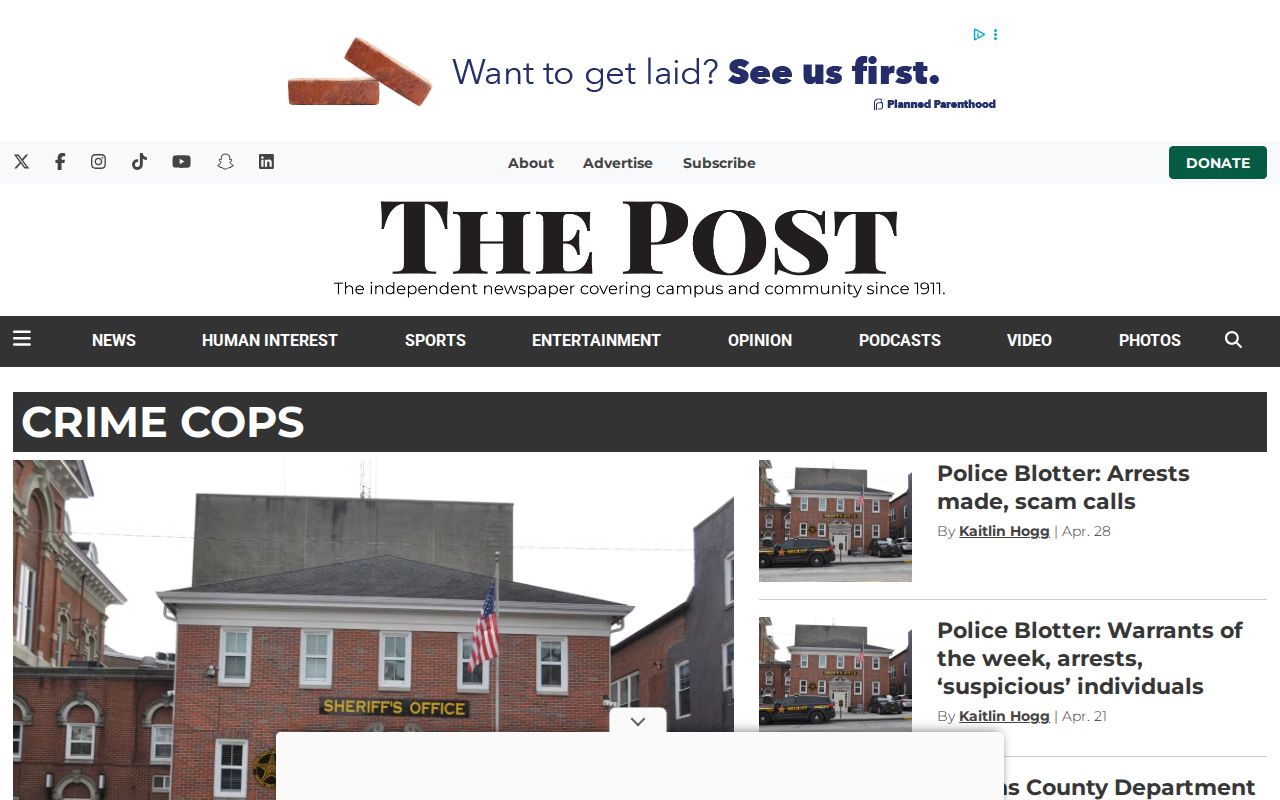
A news archive is not a live county roster. It is secondary reporting. Go back to the sheriff for current custody status. Go to the court record itself for a final case outcome.
Ohio VINE can send custody alerts once an initial search has turned up a name. Coverage is uneven, though. Each jail decides whether to participate and which event data it sends. The system is no substitute for a current roster. It cannot replace a records request, a court docket, or a call to the jail holding the person. A new booking may also lag behind reality. Local review, data transfer, a name variation, or a protected record can delay it.
Note: Treat an update time as the source’s refresh point, not as the arrest time or proof that every new booking has posted.
Official and Secondary Ohio Sources
Start with official records. The agency or court created the entry in the first place. The right source depends on the question you are asking. A jail roster shows present custody. An arrest report documents the event. A court clerk tracks the case outcome, and ODRC holds prison and supervision records. News outlets and secondary publishers can help you find a story or a later correction. Just remember their pages can carry stale copies. They can drop context, or stay online after the government record has changed.
| Channel | Official status | Best use and limit |
|---|---|---|
| County or regional jail roster | Official custodian or its linked vendor | Check current custody and available booking fields; coverage and photos vary. |
| Police, sheriff, or OSHP release | Official agency publication | Read selected public safety updates; do not treat a release as a complete roster. |
| Municipal or county court | Official court record | Follow charges, pleas, hearings, and judgments; Ohio has no single public portal for every local docket. |
| ODRC Offender Search | Official state corrections source | Use for prison, supervision, or judicial-release status, not a county booking. |
| RecentlyBooked and Busted Newspaper | Unofficial secondary publishers | Discovery only. Verify every claim with the county or court; a free correction route is not guaranteed by Ohio law. |
| Arrests.org, Mugshots.com, and Mugshots.zone | Unofficial secondary publishers | Listings can be stale or incomplete. Do not treat them as an official Ohio record or a complete statewide feed. |
| Ohio and regional news outlets | Editorial reporting | Useful for context and published corrections, but not a live jail roster. |
RecentlyBooked offers a published review policy for its Ohio route covering dismissed, sealed, incorrect, outdated, juvenile, or duplicate entries. Review is free under that policy, but a third-party copy is still not an official record, and no particular result is promised. The publisher's stated policy is simply that publisher's own process.
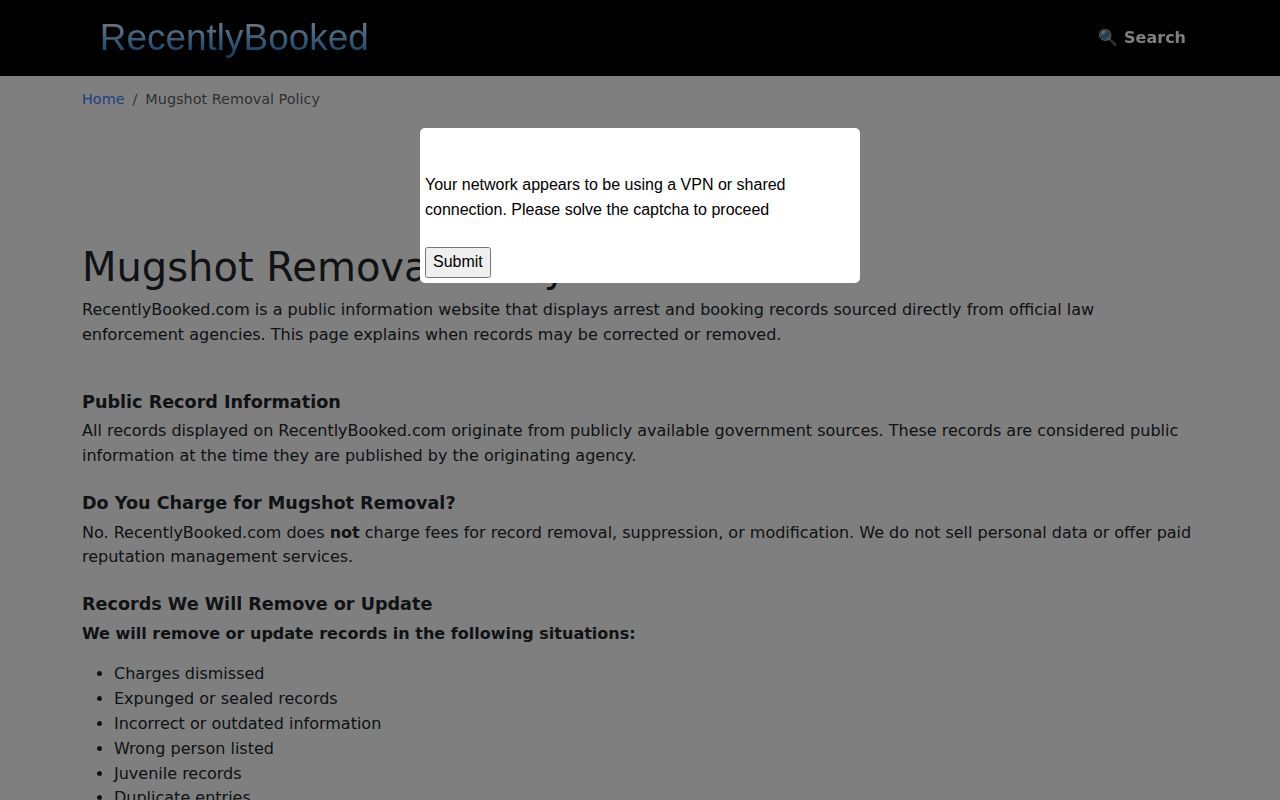
The screenshot displays a policy page rather than a booking-photo search result. Verify the original county record before acting. Sensitive documents belong only with a confirmed publisher contact.
Mugshots.com says its record-maintenance process is free for certain documented cases. Those include sealing or expungement, incorrect information, or identity theft. Death and a favorable or satisfied disposition also qualify. The site asks for its site ID and official documents. It promises no processing timeline, though. That is the publisher's stated policy. It is not an order forcing every private copy off the web. The Mugshots.com record-maintenance policy lays out that update process and its limits.
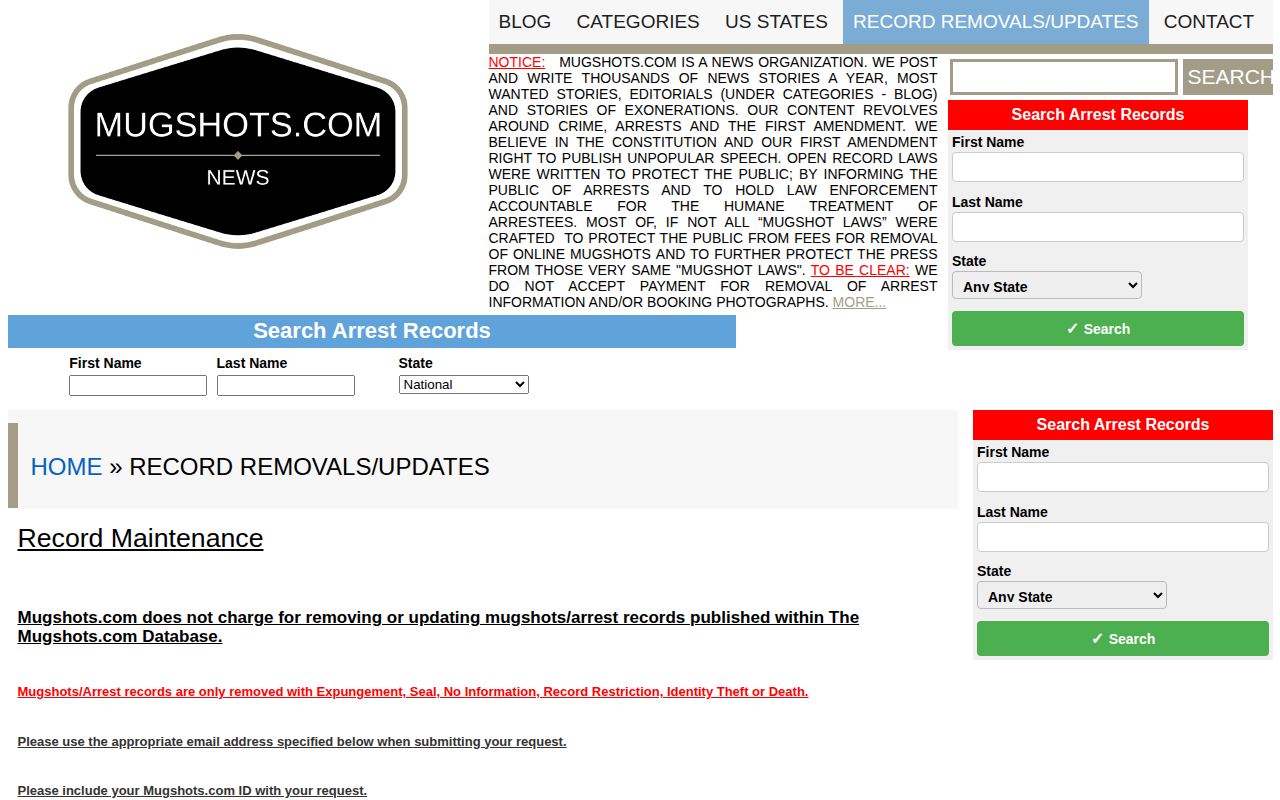
Newsroom corrections work differently from official arrest lookups. Cleveland 13 offers one example. Its Cleveland 13 corrections policy lets readers flag a factual error for free. A correction fixes a mistake, though. It cannot erase a truthful archived story, and removal requests go through the outlet's own review. Treat it as editorial, not a records search.
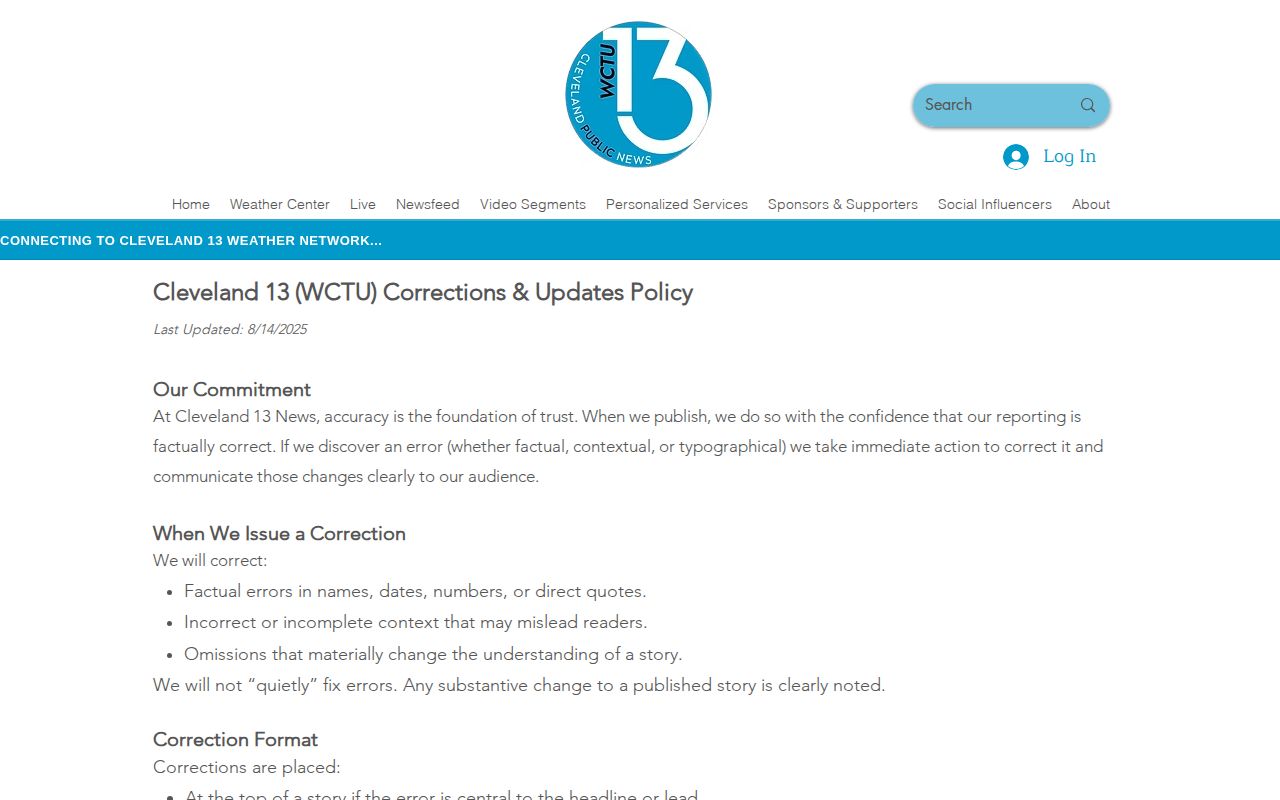
Newsroom policies and aggregator terms shift over time. Verify the current terms, keep the official source, and attach the court outcome when you ask for a correction.
Ohio Mugshots and Photo Policies
Ohio sets no statewide rule requiring booking photos. Each county jail roster decides its own format. Some pair every arrest entry with a photo. Others list only names and charges. The Ohio Courts Network jail-project status document, dated March 30, 2021, sorted facilities into those sending photo updates and those flagged “Complete-No-Mugshots.” That paper is history, not a live county-by-county policy map. A county's current practice comes from its own roster.
Where a photo comes from matters. A county jail takes the booking photo during arrest processing, and the arresting agency or facility holds it. The ODRC Offender Search can display a photo for someone in state prison or on supervision. That image belongs to the corrections record. It does not prove a fresh county arrest. The Federal Bureau of Prisons locator posts no photo. Third-party copies can outlive corrections, so check the original custodian and the final court outcome.
Ohio's approach stays text-first. You rarely need a face to find the lawful custodian. The arrest record, agency policy, and court disposition explain more than any image. If a roster shows no photo, ask the custodian directly. The jail can tell you whether one exists and whether public-record and privacy rules allow its release.
What an Ohio Booking Record Shows
A booking record is the jail's entry for a person received into custody. What it holds depends on the custodian and the case. A public roster may list only a name, booking number, date, and status. A record request can dig deeper, asking for the underlying booking or release record and related documents. When a field is missing online, the reason varies. The custodian may not keep it in that view, or it may be withheld or redacted under law.
| Field | What it can show |
|---|---|
| Name and booking number | The name recorded at intake and the identifier used by that jail. Spelling and name order can vary. |
| Booking or intake date | When the facility entered the person into its system. It is not always the time of arrest. |
| Arresting agency | The police, sheriff, or other agency that brought the person to the booking custodian. |
| Charges as booked | The charges entered at intake. They can change as a case moves through court. |
| Bond or bail | A court-set release condition or amount when recorded. A blank field does not show why a person remains held. |
| Custody or release status | Whether the source currently lists a person as held, released, transferred, or under another status. |
| Photo or court fields | A booking image, court name, or next date may appear when the custodian publishes it and law permits disclosure. |
One arrest can leave entries at several layers. A county booking record covers intake and custody. A court docket picks up the case later. An ODRC profile tracks prison custody or state supervision. These are separate records, not one file. A few terms recur: "disposition" is the court's recorded outcome, "arraignment" is the early hearing where a charge is read and a plea entered, and "bond" is a court-set condition for release while the case moves forward.
- Booked
- Received and entered by a jail or other custody facility.
- Released
- No longer held by that custodian. Release does not say whether the charge was dismissed or proved.
- Sealed or expunged
- A court-ordered change to access or official record handling, with distinct legal effects.
A booking photo is just one possible field, never a statewide promise. County rosters in Ohio differ sharply. Some post a photo on the official page. Others show none at all. No single rule binds every jail roster, so expect the field to vary by county and by policy.
Ohio Booking Record Requests
Ohio's Public Records Act lets any person ask a public office for records through Revised Code § 149.43. You generally need not state a purpose or give your identity. A records request is the fallback. Use it when no live roster exists, when an entry has aged out, or when the public page leaves out a report or photo. The office must respond promptly, within a reasonable period. Ohio sets no single turnaround for every request. Copy costs can apply. Sensitive or exempt portions may be withheld or redacted.
Aim a narrow request at the agency that keeps the record. A county sheriff or jail request is its own thing. So is a police report request. The same goes for a court docket request, an OSHP report request, or an ODRC record request. For OSHP, the state's Department of Public Safety portal accepts public-record requests. Identify OSHP or DPS and describe the event. No fixed statewide fee or wait time exists for a booking photo. A public office does not have to create a new record. It need not answer a question in place of producing one.
- Name the office and record type. Ask for the arrest report, booking record, booking photo, release record, or court disposition as separate items when each is needed.
- Give a useful date range, county, location, case or incident number, arresting agency, and person’s name if known. A narrow request helps the custodian find the right record.
- Ask for routine factual portions and any nonexempt parts that can be released after redaction. If the office denies access, ask it to identify the legal basis and the records custodian.
- Track any copy charge and response. If the web roster is stale or the record is not held by that office, ask which agency or court has the record.
For OSHP, one split matters. Separate the incident or arrest report from crash records, dash-camera video, body-camera video, citations, or audio. Video preparation and redaction follow the agency's lawful policy. Assume nothing about copy rules or web display fees. At the county level, start with the sheriff or jail records office. That office is the one the local jurisdiction shows. At the court layer, ask the clerk for the docket or disposition. For state prison or supervision data, ODRC's search profile is the public starting point. A separate record request goes to the relevant public-records office. The Ohio booking-photo statute defines the photo and related arrest information. Its anti-pay-to-remove rule covers both.
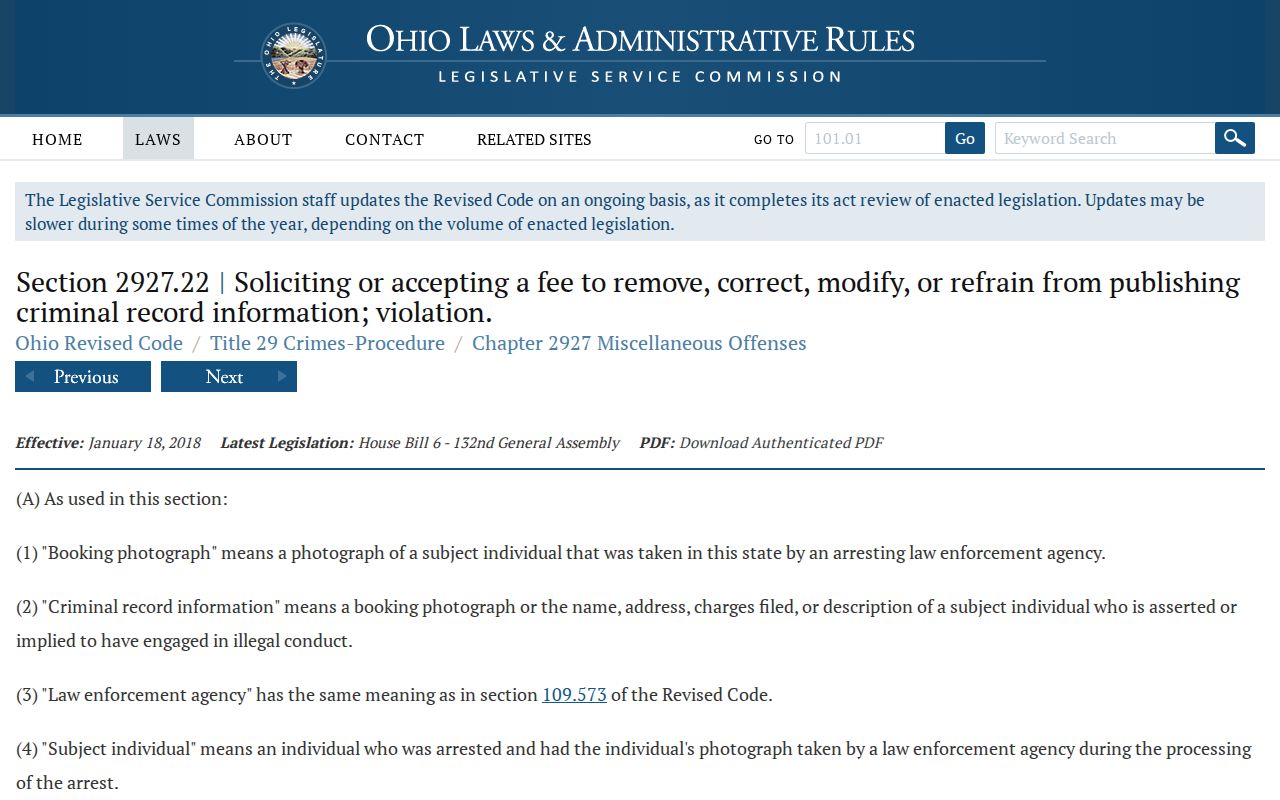
A records request still goes to the government custodian that holds the item.
Note: Ask for existing records by name and date range; a public office need not make a new statewide arrest list for a requester.
Ohio Mugshot Law and Removal
Ohio Revised Code § 2927.22 took effect on January 18, 2018. It targets publishers of criminal-record information. The law bars them from negligently soliciting or accepting payment, or anything of value, from the subject. The purpose is to remove, correct, modify, or withhold that information. A booking photograph has a statutory definition. Under the statute, it is a photo taken in Ohio by an arresting law-enforcement agency. Its definition of criminal-record information reaches specified identifying details. It also covers filed charges that assert or imply illegal conduct.
The rule is anti-pay-to-remove, not a general erasure right. It does not force every publisher to delete a record on request. Nor does it make every photo public. A violation counts as a first-degree misdemeanor. The statute also allows a civil action with statutory damages, actual and punitive damages, and possible costs and fees. The outcome depends on the facts. A correction request for a wrong person, date, charge, juvenile record, later disposition, or court order goes first to the source agency. Then it goes to a lawful republisher with supporting documents.
This law grew out of fights with online arrest publishers who demanded payment. Earlier litigation involved photos left online after a case was dismissed or sealed. That history shaped the statute's focus. It still is not an automatic deletion order. A public record may be corrected or restricted by the proper agency or court. An older private copy may need its own documented correction request.
Free correction or opt-out routes differ by publisher. Many have no posted process at all, so confirm the current policy and check the official source first.
Ohio Arrest Records: Access Limits
Ohio's Public Records Act opens routine factual records to the public, within set limits. Investigative material marked confidential stays protected. So do juvenile details, victim identities, medical facts, and confidential sources. An agency may withhold or redact those parts. It should release what it can separate. Even so, a roster is never a promise that every field in the underlying file can be shared.
Separate statutes guard juvenile fingerprints, photos, and arrest or custody records; Ohio Revised Code § 2151.313 is one. A roster name alone proves neither age nor status. Juvenile files are not an adult booking channel. A public site should never copy protected identifying details from them.
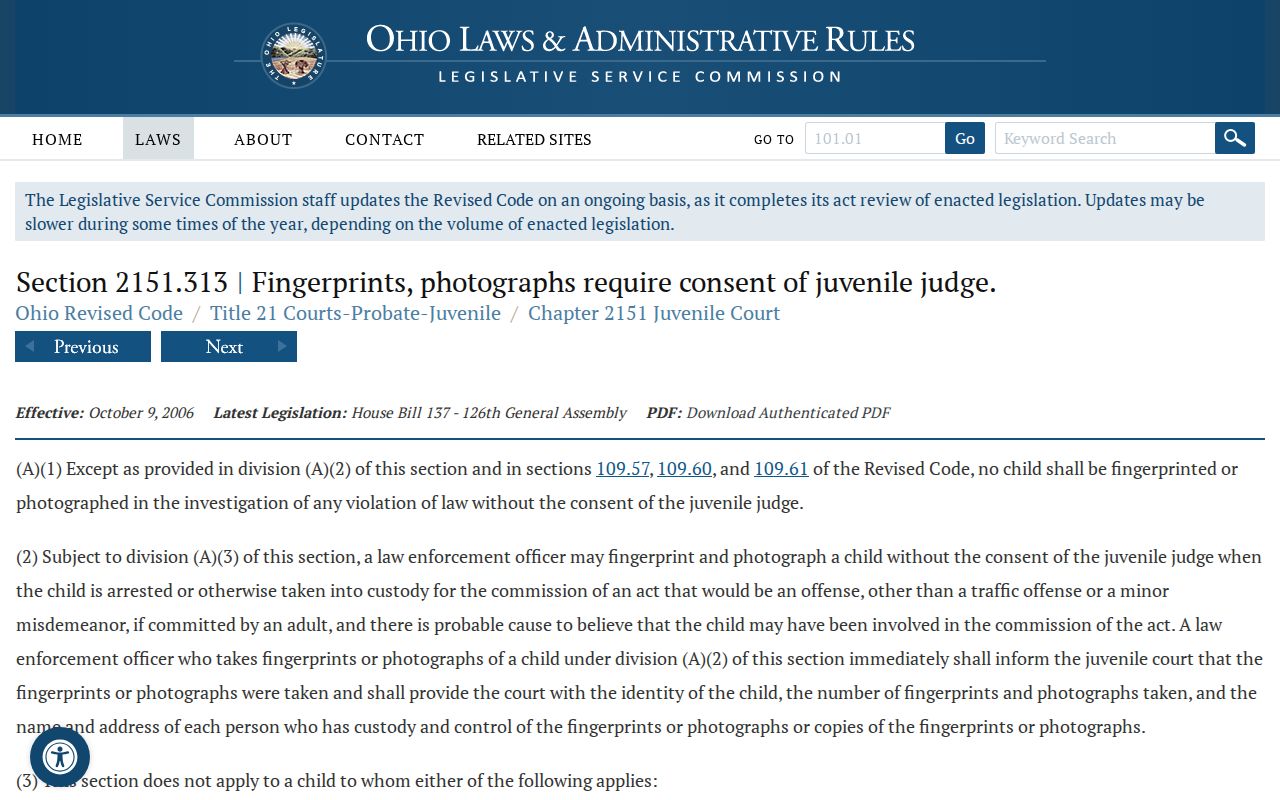
Older third-party pages cannot loosen these limits. Statute controls either way. Ask the record custodian how a withheld or redacted field is handled rather than guessing from another source.
Note: An official redaction or juvenile-record rule applies even when a third-party page displays older or broader information.
Warrants and Ohio Wanted Lists
Ohio has no single public statewide warrant database. County courts, sheriffs, and police agencies run their own checks, and the rules differ from place to place. Availability varies by county. The Attorney General's Fugitive Safe Surrender pages describe a program, not a live wanted list. LEADS supports law-enforcement warrant checks only. The public has no substitute route into that system.
State corrections does publish one fugitive list. The ODRC Parole Violators at Large listing names people the Adult Parole Authority has declared violators of supervision. Each entry can carry a photo, name, ODRC number, declared date, birth date, and offense information. ODRC warns that listed people may be armed or dangerous. Never approach or confront anyone named there; call local law enforcement or 911 in an emergency. Send tips only through the official ODRC route.
Federal wanted notices are a different animal. The U.S. Marshals Service wanted-fugitive finder posts selected federal notices, including some district material. The FBI wanted page offers another federal source. Neither one is an Ohio county warrant database. A public web page can lag behind a court's later change, so confirm any entry with the issuing agency.
Trying to resolve a possible warrant calls for care. Use a lawyer, or contact the issuing court or the law-enforcement records unit for a current status. A public list is not a tool for planning around police. Do not rely on someone else's photo for identification. Keep your distance if safety is a worry. Then contact the agency directly.
Note: A wanted page may remain online after a status changes, so confirm any entry through the agency responsible for the case.
Ohio Arrest, Court, DOC, and Federal Records
An Ohio arrest often leads next to a court docket, a release entry, or a transfer record. The Supreme Court of Ohio trial-court directory routes each search to the right local court. No single public portal covers every municipal, county, common-pleas, and juvenile docket. The Ohio Courts Network serves justice partners only. Case status comes from the court that heard it. Read the clerk's exact entry.
A disposition is the court's recorded outcome. Treat a plea, dismissal, acquittal, conviction, or sentence exactly as the clerk wrote it. Pending counts as a status too. When a name leaves a county roster, check for release or transfer before searching another custody system.
The Ohio Department of Rehabilitation and Correction covers a different layer: people in Ohio prisons, under ODRC supervision, or judicially released. Search fields include name, offender number, county of commitment, residential county or ZIP, status, and next parole hearing. Profiles can add a photo, birth date, location, sentence or release data, offenses, and supervision details. This is not a county jail booking tool.
The official ODRC search draws a clear line between state custody data and county booking records. An ODRC profile answers where a person sits in the state system. It does not by itself signal a new arrest. Match the source to the person's current custody layer. A county docket, a prison profile, and a parole status answer different questions. Pick the record that fits.
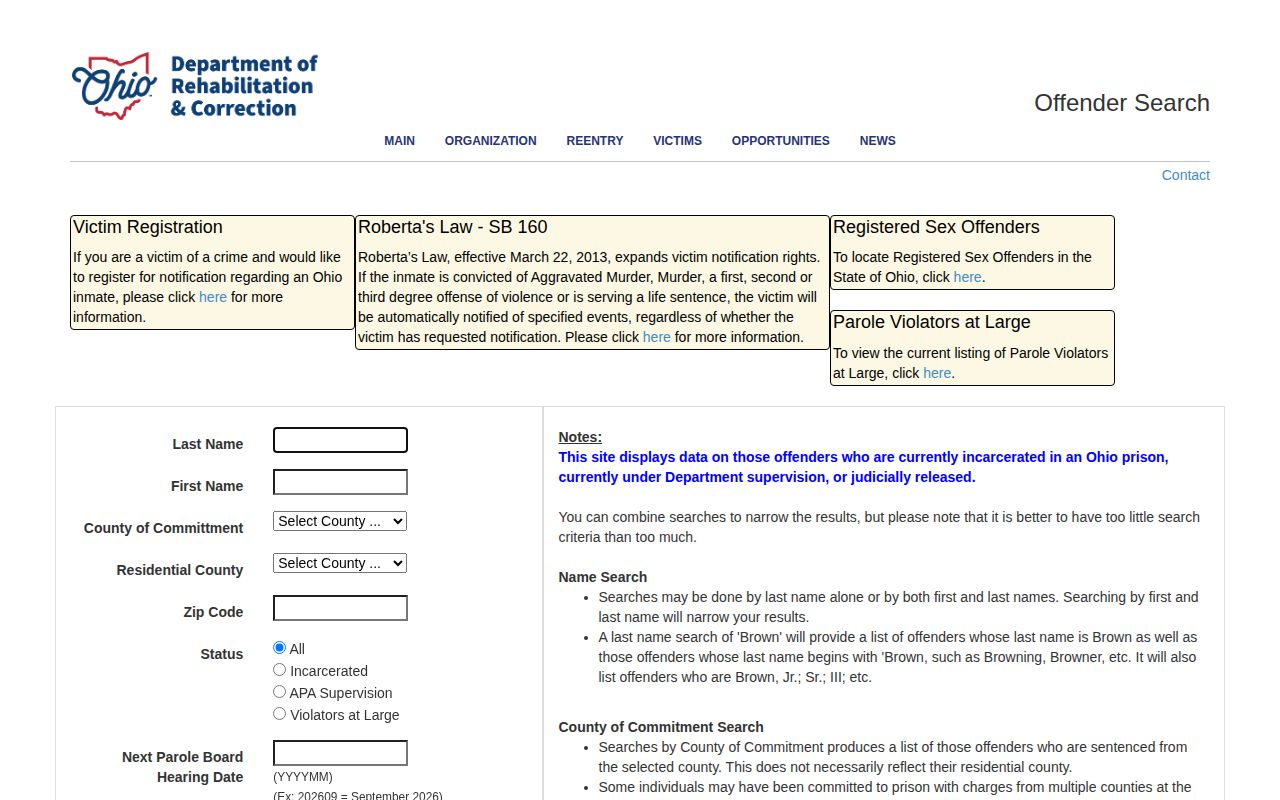
County pretrial records, state prison profiles, and parole status each answer a different question. Pick the source matching the person's custody or supervision layer.
Federal custody runs on a separate track. The Federal Bureau of Prisons locator generally covers federal records from 1982 forward. It shows no public inmate photos. The locator is not a county or Ohio booking feed. The ICE Online Detainee Locator handles federal immigration detention. It demands its own identifying details. That tool is not an Ohio arrest roster. DHS VINE is separate from Ohio VINE.
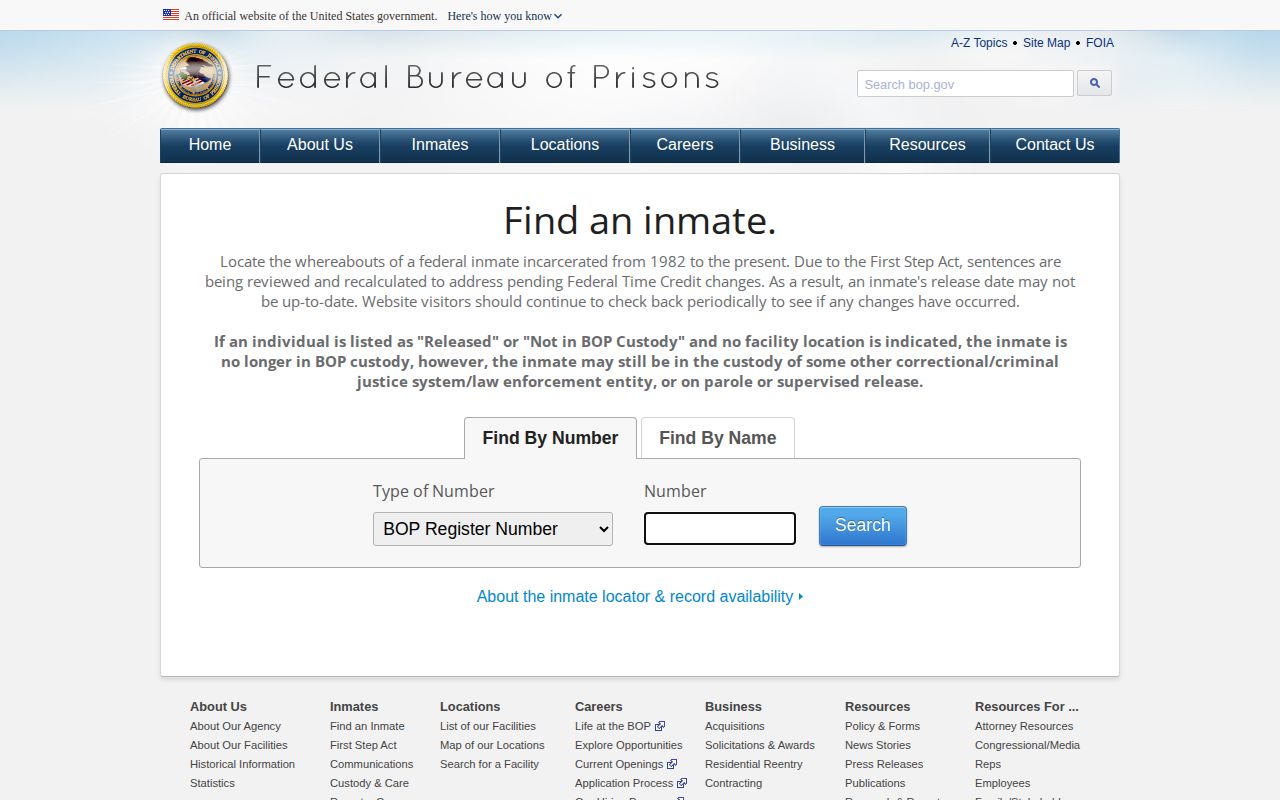
The federal locator carries its own record range and custody scope. Expect no photo where the system offers none.
Old Ohio Arrest Records and Archives
A live jail roster answers today's question: who is in custody right now? It was never built to hold history. Ohio sets no single statewide retention span for booking photos or jail logs. The same goes for police reports and release entries. A sheriff or city police department may follow its own approved local retention schedule. So may a regional jail or a court. Legal holds and special statutes can extend a record's life with its custodian. So the schedule on file at the office governs how that office handles its own arrest records. A search-engine result does not.
Very old correctional material has a home, though. Ohio History Connection preserves prison registers and related collections. Its Incarceration Record Index lists an incomplete set of Ohio Penitentiary and Ohio Reformatory admissions from 1888 through 1923. Some cards were lost or destroyed over the decades. Treat the index as a research path for historic corrections records. It is not a full arrest database. It is never proof of a present-day booking.
Chasing an older county or city record takes a different route. Ask the custodian for the approved RC-2 or RC-3 retention schedule. Ask whether the record was lawfully destroyed, moved to an archive, or kept because of a case or legal hold. If a public office still holds it, file a specific request under Ohio's public-record law. One more point. A page vanishing from the web proves nothing about the underlying record.
Sealing and Ohio Arrest Records
Sealing and expungement differ. Sealing hides a record from public view. Authorized users keep their access. Expungement goes further, directing that official records be destroyed or deleted under the governing law. Eligibility, waiting periods, and offense limits vary case by case. No single timeline fits, so confirm any signed order with the court and each agency holding the record.
A court order does not reach old private copies. Start with the custodians. Confirm the court, the originating agency, and other government holders applied the order. Then send a documented removal request to any republisher still showing the stale entry. Ohio's anti-pay-to-remove law targets a publisher's negligent demand for payment. It is not a cleanup guarantee.
An arrest record shifts as the case moves. Dismissal, acquittal, plea, conviction, sentence, or pending status appears in the court's own words. Attach that disposition to any update request. Search results may refresh after the source page changes, but the record itself stays untouched.
Note: Preserve the court’s exact disposition wording and keep it with any request to update an official record or secondary copy.