
Ohio's 24-Hour Arrest View
No public feed counts every Ohio arrest in one place. The label "24-hour" can point to a booking-date filter, a current-custody roster, a vendor's retained entries, or simply a page refreshed that day. Two feeds can disagree. One lists people still held after recent bookings. Another keeps entries for people who already left custody. A timestamp may mark a system refresh rather than the moment a trooper or deputy made the arrest.
Booking is the step that records a person after arrest, with identity checks and the charge listed. That step can trail the actual arrest because of transport, paperwork, medical review, or a move to another facility. Counties differ here too. Some use vendors, some publish on their own schedule, and some skip a live roster in favor of releases or records requests. The arresting agency and the booking agency may not match either. An OSHP stop, for instance, can end up as a county or regional jail record. It may not appear as a patrol roster entry.
Find Where an Ohio Arrest Was Booked
Begin with where the arrest happened, then confirm who took custody. A city officer, a sheriff, a state trooper, or a regional team may open the case. A different jail may hold the person. Not sure of the county? Use the agency named on a citation, release, or incident notice to narrow the path. The Ohio County Directory points to each county's local source. A regional jail may call for a filter on a neighboring county or facility.
- Identify the likely county. Use the arrest location or the arresting agency’s name. If the case involved a regional jail, include nearby counties in the search.
- Open the official jail or sheriff source. Follow the county’s own roster, inmate inquiry, or public-records link. Confirm that the page belongs to the agency or vendor it names.
- Set the right search fields. Search by a known name or booking number, then check the booking-date range, custody filter, and facility selection. Read the labels before treating a result as a one-day list.
- Check the record with its custodian. If no result appears, contact the jail or records office with the person’s name, approximate date, and arrest location. Ask whether a transfer, release, citation, or different spelling could explain the gap.
For one known person's ongoing custody, the free VINELink search adds a separate route into participating Ohio jail and state feeds. It is a custody and notification tool. It does not replace the jail's own record or list every arrest.
Ohio Same-Day Feed Patterns
Statewide, the picture is a patchwork. Official search tools sit beside vendor pages, regional systems, and selected media releases. The examples that follow show what a visitor may run into. They prove no county feed complete. They set no shared update schedule. They create no statewide photo rule.
| Official source pattern | Ohio example | What the view establishes | Window and photo limit |
|---|---|---|---|
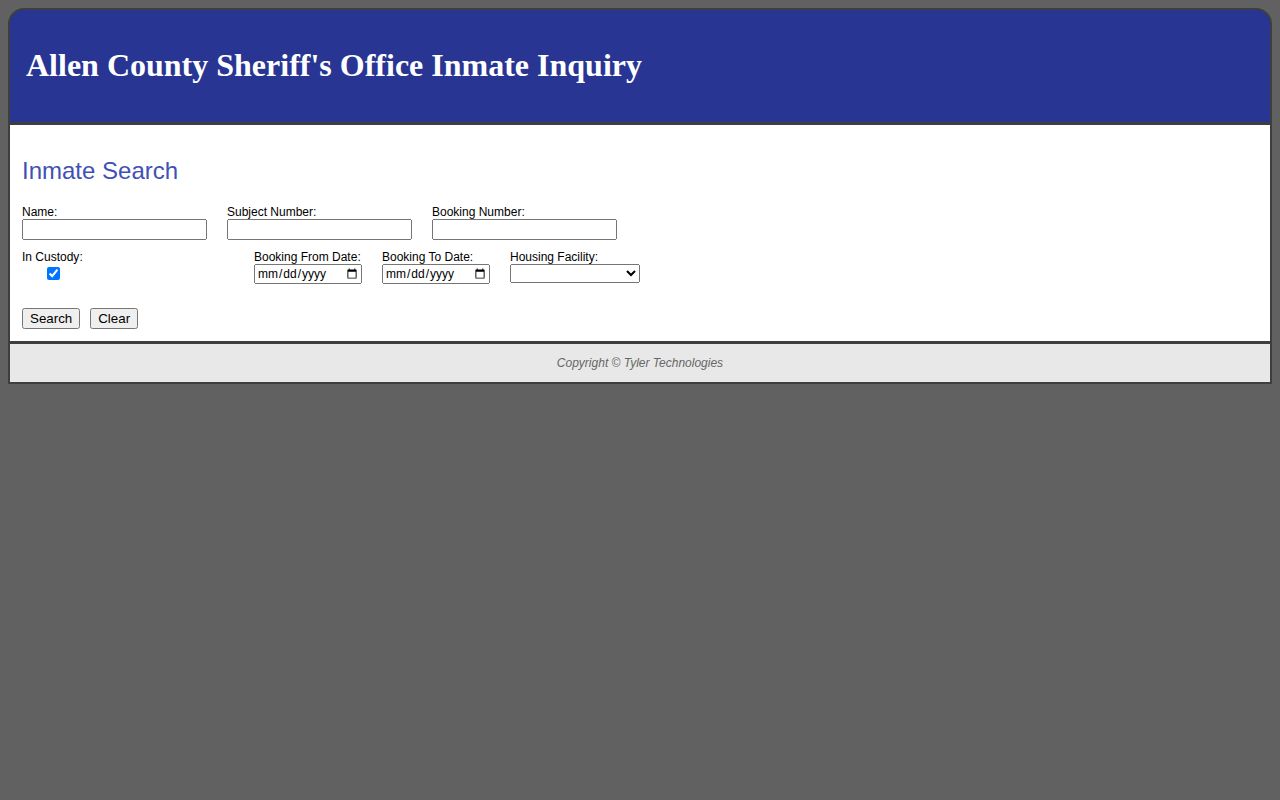
| County inmate inquiry | Allen County Sheriff Inmate Inquiry | The search form accepts name, subject or booking number, custody status, date range, and facility. | Filters are visible, but the form alone does not establish a statewide window or photo policy. |
| Public-safety catalog | Wood County Sheriff P2C catalog | A county-operated entry point separates inmate lookup from event search and other public tools. | Catalog navigation is not proof that every event posts at once or remains in custody. |
| Vendor roster with update time | Belmont County Sheriff roster link; Warren County / Miami Valley Jails | Belmont’s linked roster records fields such as booking date, charges, court, bail, disposition, and release; Warren’s system reports frequent updates. | A visible run time or frequent refresh is not a strict 24-hour arrest window. Photo display varies. |
| Regional jail search | Southeastern Ohio Regional Jail | The facility may serve a multi-county area, so a booking can appear under a regional custodian. | The roster can show booking photos; confirm the facility and charging-county labels before reading a result. |
| Dated media release | Union County daily media releases; Allen County media releases | These official pages preserve selected dated agency statements. | A release can appear the same day or later and may omit routine bookings; it is not a live roster. |
Large counties often split duties across municipal, sheriff, court, and regional systems. Smaller ones may offer a vendor view or an app announcement. Some share only an occasional release. A few post no web roster at all. A third-party county listing proves nothing about county supply. When a source leaves a field unstated, treat that field as unknown. Do not borrow a value from another system.
Read the Search Fields Carefully
Ohio search screens reuse familiar labels for records that mean different things. The booking date may not match the arrest date. A custody checkbox can hide people already released. A "run date" or refresh stamp belongs to the system, not the event. A regional search may offer a county selector. Pair the facility field with the charging county. Do not assume the jail sits inside the county a news report named.
| Field or label | How to read it |
|---|---|
| Name / subject | Search text for the person. Try a known spelling variant if the official source allows it. |
| Booking number | A facility record identifier. It can be more precise than a name, but it is not a court case number. |
| Booking date / arrest date | These mark separate events. Check which date the filter uses and do not treat either as a conviction date. |
| In custody / current status | A status recorded by that system at its last update. It may change after release or transfer. |
| Facility / arresting agency | The facility holds or processed the person; the arresting agency initiated the case. One does not stand in for the other. |
| Charge / court / disposition | Charge text records an charge. A disposition is a later court outcome, when the source has one. |
| Run time / release time | A run time is a page refresh marker. A release time records a custody event, not whether a court dismissed or resolved a charge. |
Expect blank fields. A missing court date or release entry means "not shown," not that no court event occurred. When a date, status, or spelling truly matters, contact the records custodian.
Photos and Statewide Activity
Ohio sets no single statewide booking-photo policy. Some jail systems display the booking photo. Others show text only. A few require a direct request to the public office. The Ohio Courts Network jail-status snapshot from 2021 recorded both kinds of facilities. Some sent regular records. Others were marked "Complete-No-Mugshots." That list shows past variation, not a current map. County systems change their vendors and public settings over time. A press photo from law enforcement is not the same record as a jail booking image.
The Allen County inmate inquiry shows the text-first approach. Its fields include name, subject number, booking number, custody status, date range, and facility. The form lets a reader narrow an official lookup without exposing a wall of faces. Its fields describe that county's interface, not the search rules of every Ohio jail.
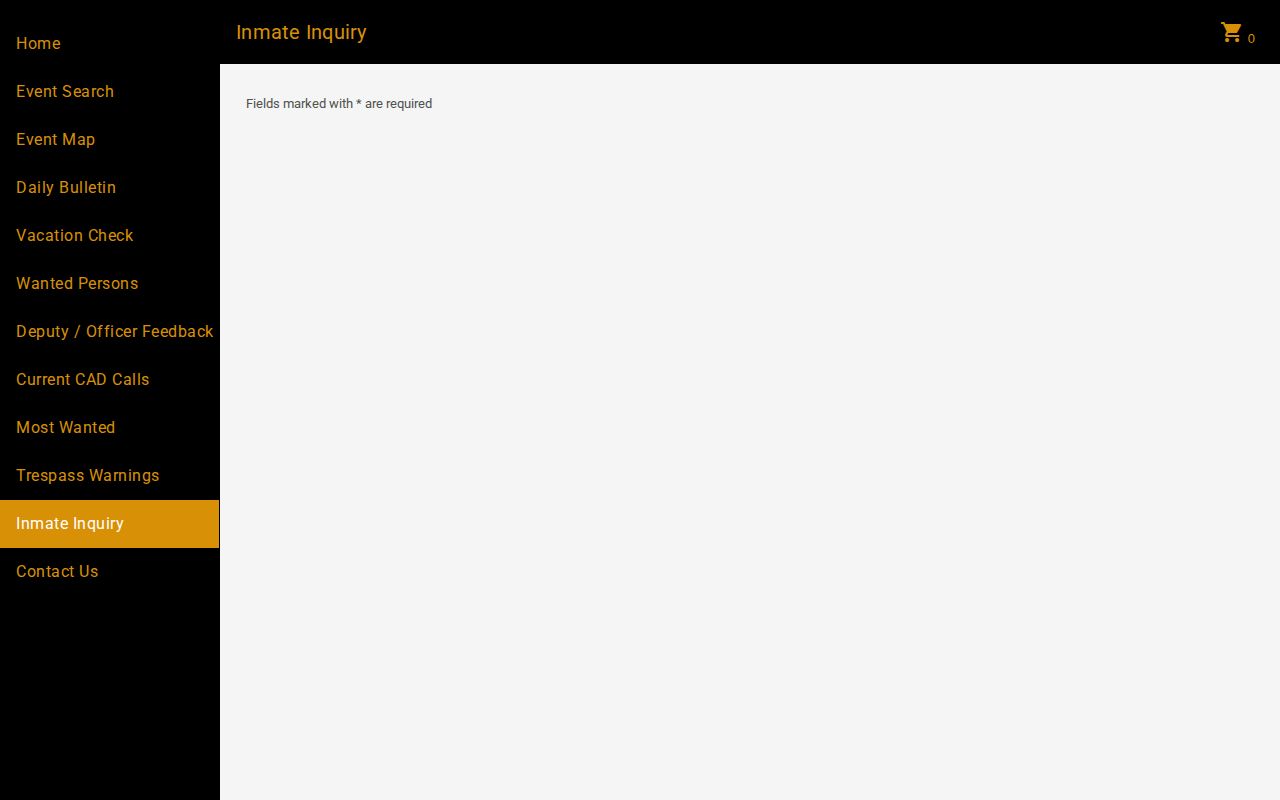
The Wood County P2C catalog separates its tools into inmate inquiry, event search, and daily bulletin entry points. That menu splits custody lookup from broader public-safety activity. Each result still depends on the facility selected and the search fields used.
Ohio State Highway Patrol releases add statewide color. They do not close the roster gap. Its enforcement bulletin reports selected campaign results. Impaired-driver arrests appear among them. The Ohio Traffic Data dashboard tracks traffic and crash figures. These are agency-chosen summaries, not a live list of every trooper arrest. A trooper's arrest usually routes to whichever county, regional, or other facility accepts the booking.
Why a New Arrest Can Be Missing
A brand-new arrest often takes time to show up online. The jail has to finish transport first. Paperwork comes next. A supervisor may sign off on the entry before it goes public, and a vendor's sync cycle can add hours of its own. Weekends make the queue longer. Sometimes a transfer moves the person to a neighboring facility, so the arrest record drifts away from the county you searched first. A citation or a release at the scene leaves no jail booking to find at all.
Other gaps have different roots. The name spelling may differ from your search. Someone booked and released quickly can vanish before the next refresh. Juvenile and victim records stay protected in many cases. Even when a public record exists, a roster can skip the booking. The Ohio Public Records Act opens the door to records an office holds, but it does not demand one live statewide website or force any agency to build a new feed.
When custody truly matters, call the jail directly. Ohio VINE sends alerts for participating feeds. Yet its data can lag a fresh booking too. For dated summaries beyond current custody, the wider Ohio arrest log landscape helps. Just keep the publication date apart from the event date.
Note: A page refresh time measures the system’s update, not the time of arrest, booking, or court action.
Booking Is Not a Verdict
A booking entry in Ohio marks two facts only: someone was arrested, and someone was held. The charge shown at intake is not fixed. It can be reduced, dropped, or resolved differently later. A roster label of "released" tells you the person left that facility's custody, nothing more. Another hold may still stand. The case may still be open.
No single public search in Ohio reaches every municipal, county, and juvenile docket. So the arrest county and the court type matter when you dig deeper. To confirm the formal outcome of a case, go to the court that handled it. If a record looks wrong, save its source and date, then contact the agency that created it.