
Ohio VINE and VINELink
Ohio's official victim-notification hub lives on the Ohio Attorney General's Victim Notification page. The state's VINE program ties together several partners. The Attorney General leads it. Support comes from the Buckeye State Sheriffs' Association, the Department of Rehabilitation and Correction, the Department of Youth Services, and the VINE provider itself. For the public, the front door is VINELink. It is free. It is also anonymous.
VINE serves one main purpose: tracking the custody status of a single person and sending notice when something changes. Booking is the step where a jail formally records someone as in custody. It happens after an arrest. VINE is not a full arrest-history database, though. A jail event might be a release, a transfer, an escape, or a death. State prison events through ODRC can include release, transfer, death, or parole-status changes. What appears, and when, depends on the local jail or state feed supplying the data.
To begin, the VINELink search screen asks for a state choice first. Person and facility searches come after that.
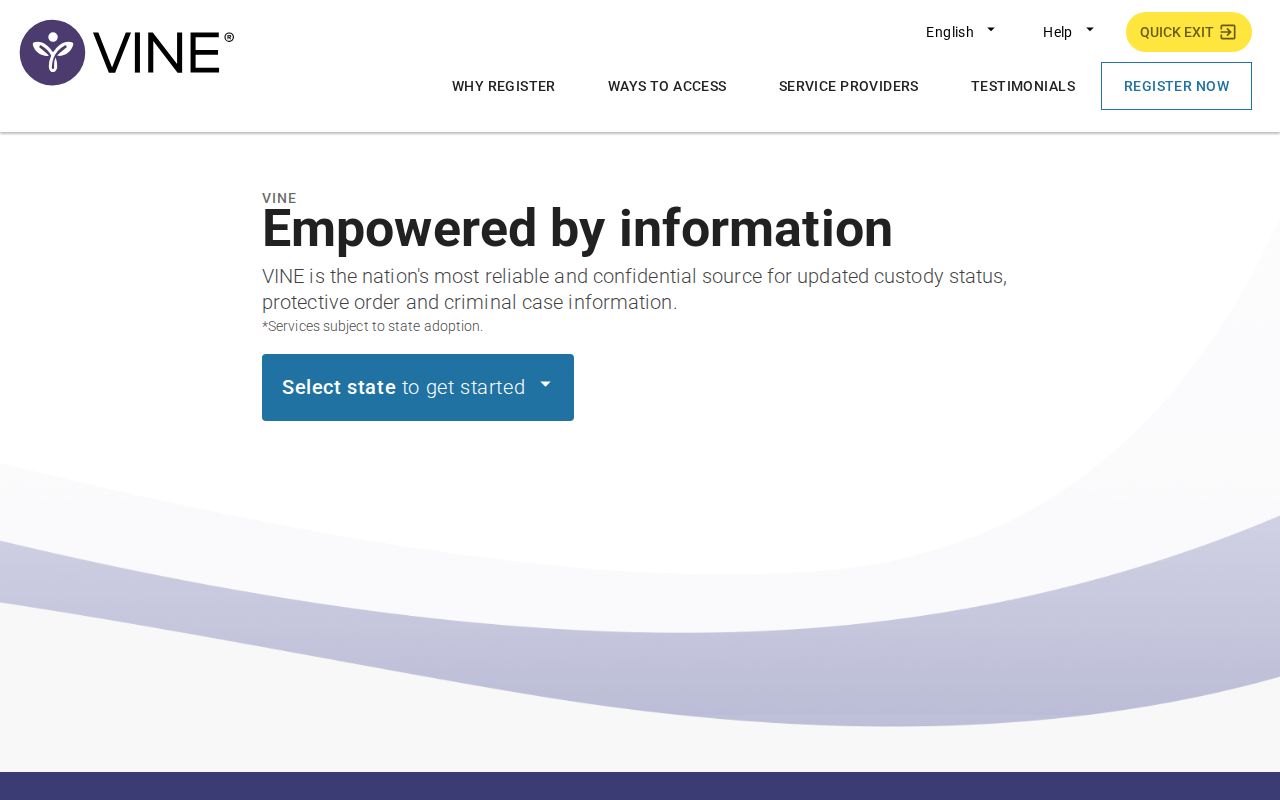
Pick Ohio there. The search choices then depend on the connected source. A result only mirrors what that source sends, so it may not signal a fresh arrest or any court outcome.
Search One Ohio Custody Record
Searching for one person works best with a name or an offender number. Multiple results can come back. Compare the name and the listed county. Only then should you open a profile or set an alert. A near match alone proves nothing about identity. When the county is known, selecting it can narrow things if VINELink offers that option.
- Open VINELink and select Ohio from the state menu.
- Choose the county or facility when a location filter is available.
- Enter the person's name or identification number and submit the search.
- Review each possible match, including its location and status, before selecting the right record.
- If no match appears, check spelling or the number, then contact the jail or try again after a short delay.
Someone may be arrested in a known Ohio county. The Ohio County Directory can then point you to the local sheriff or jail to call. City police often make the arrest. The booking may then happen elsewhere. It can occur at a county or regional facility, so the arresting agency and the booking site do not always match.
That gap matters here. Regional jails in Ohio can serve several counties at once. Someone can be arrested by one agency. The booking may happen at a facility covering a wider area. A county search that returns nothing is not the end. Check the facility name instead, or ask the arresting office where the booking occurred. The county label on a case is one thing. The place reporting custody is not always the same.
Fields in an Ohio VINE Result
A VINE result is a custody snapshot. It comes from a participating data source, not a full booking packet. Start with a name or a number. The system then connects to a county or facility when that source is available. Event wording and detail levels differ from one jail to the next. The state corrections feed adds its own phrasing. Read a blank field as simply not shown. It is not proof that no arrest record exists.
| Result detail | What it can tell you |
|---|---|
| Name or offender number | Which listed person record may match the search; confirm the identity before registering. |
| County or facility | Which participating jail or corrections source is reporting the custody record, when shown. |
| Custody status | The status label or event most recently supplied by that source. |
| Event notice choices | The release, transfer, escape, death, or other events configured for that source. |
ODRC runs on a separate statewide feed. It covers people held in an Ohio prison. It also covers those under ODRC supervision and anyone judicially released. Such a person may show up through the agency's Offender Search. That path is distinct from county jail bookings. ODRC reports custody and supervision data rather than jail intake details.
Note: A county jail's event labels depend on its own feed, so a VINE record can carry fewer details than a jail booking record.
Register for Ohio Custody Alerts
Registration links a contact method to one person. It also covers the event types that source supports. Ohio's VINE brochure lists four options: phone, email, text, and VINEmobile. Phone registration relies on a four-digit PIN, or personal identification number. The brochure notes the system keeps calling for a period. It stops once the recipient enters that PIN or hangs up. Email registration skips the phone PIN entirely.
- Open the matching person's record and choose an alert option that the source offers.
- Enter the phone number, email address, or text destination where notices should go.
- For a phone alert, choose a four-digit PIN and keep it private.
- Complete the prompt for that contact method and save the confirmation details.
- Review or update the registration if contact information changes or the person is moved to another participating source.
An alert tracks only the person and event types on the chosen record. It does not cover every Ohio arrest. Nor does it catch every custody change statewide. Keep the confirmation to yourself, and revisit the registration whenever your contact method changes.
The official Ohio VINE brochure lists the hotline at 1-800-770-0192. It also gives the TTY line at 1-866-847-1298. Phone, email, text, and VINEmobile access are all described there. The Attorney General's VINE information page tells users not to depend on an alert alone. Take precautions as if the person is already out. Never post a victim's registration details, PIN, phone number, email, or safety plan.
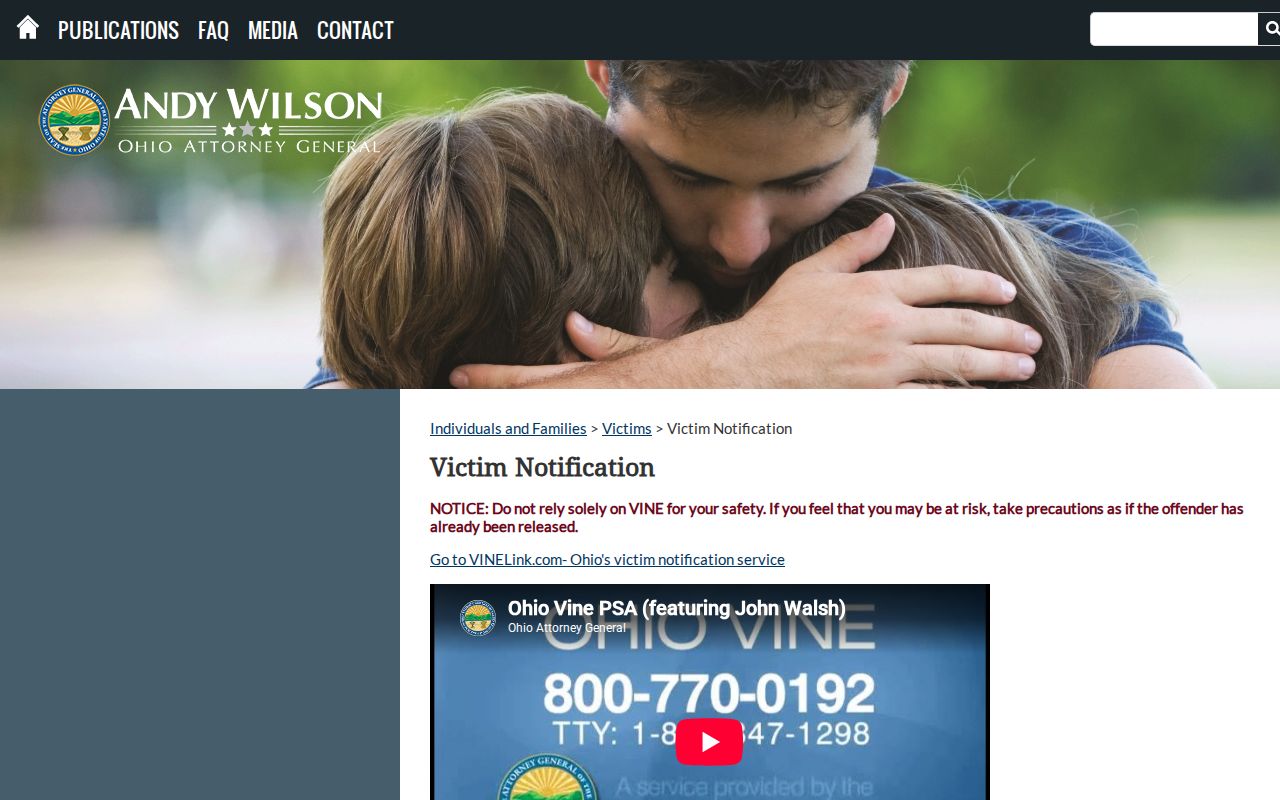
The alert service sends custody events your way. It can't force a nonparticipating jail to share data. Nor can it guarantee a message arrives before custody changes. Youth cases follow separate rules. The Ohio Department of Youth Services runs its own notification procedures, and the state brochure lists a separate notification number. Don't assume an adult county-jail search or alert choice covers a juvenile matter; use the official instructions for the correct route.
Ohio's Historical VINE Coverage
For a picture of which counties once fed VINE, one public document stands out. The Ohio Courts Network posted a jail-project status report dated March 30, 2021. It lists each system's standing. Some were complete. Others lacked photo updates, sat inactive, were changing vendors, or remained targeted for connection. Treat it as history, not a live county directory. Every row reflects 2021 status alone. The Ohio Courts Network jail-project status PDF names facilities as well as counties, so a county label does not mean every jail or police agency there shared the same feed.
| Documented status on March 30, 2021 | Counties and systems named in the document | How to read it |
|---|---|---|
| Complete data and regular mugshot updates | Allen; Belmont; Champaign/Tri-County; Crawford; Delaware; Fairfield Main; Fayette; Gallia; Greene; Guernsey; Hamilton; Highland; Jefferson; Knox; Lucas; Marion; Montgomery; Morrow; Muskingum; Mahoning/NE Ohio Correctional Center; Richland; Ross; Sandusky; Scioto; Seneca; Shelby; Stark; Tuscarawas; Van Wert; Warren; Wayne; Williams; Franklin Corrections Center I and II; Columbiana; and listed regional or facility systems. | Regular data was reported by the project then. This is not a promise of current coverage. |
| Complete data, no mugshot feed | Clark; Coshocton; Cuyahoga/Solon; Cuyahoga/Cleveland Metro Parks Rangers; Medina; Mercer; Monroe; Preble; Putnam. | Custody data and public photo updates were separate statuses. |
| Inactive or vendor change | Paulding (no mugshots); Cuyahoga House of Corrections; Cuyahoga Correction Center; Athens/SEORJ; Darke; Logan; Summit. | The report records a historical gap or transition, not present-day nonparticipation. |
| Target or not yet complete | Adams; Ashland; Ashtabula; Auglaize; Brown; Butler and Middletown; Carroll; Clermont; Clinton; Cuyahoga/Euclid, Broadview Heights, and North Royalton; Greene adult detention; Hamilton/Reading Road and Talbert House; Hancock; Harrison; Huron; Lake; Licking; Lorain/Elyria and county; Muskingum/Zanesville; Portage; Trumbull; Washington; Wood. | The project identified planned, missing, or unresolved links in 2021. Check live before describing any as a gap. |
One local source still spells things out. The Allen County Sheriff's Office VINE page expressly describes its own program. Other local references are older or vague. Even that page covers a single source, so it cannot promise every event goes out on time.
Ohio VINELink Limits and Checks
A brand-new booking does not hit the county feed instantly. Delays happen. The person may have been released already, moved, or booked by a neighboring county. A different spelling can hide a match. Juvenile and protected records stay out of public search. So an empty screen proves nothing about whether an arrest happened. No result may simply mean the booking never entered a connected source. Or the source may not send that event at all.
After a new arrest, start with two offices: the arresting agency and the jail that took custody. The statewide 24 Hour Arrests overview explains why rosters, release lists, and dated logs each cover different windows. A county roster can still come up empty. In that case, call that sheriff or jail's records contact. Ask for the booking or release record under Ohio's public-records law. VINE is not an emergency service. For an immediate safety emergency, call 911.
Ohio VINE skips federal Bureau of Prisons custody entirely. For a federal inmate, use the separate Federal Bureau of Prisons inmate locator. That tool is not an Ohio county booking feed. Someone held in a federal, juvenile, or another state's system may never appear in an Ohio county result. VINE is not a warrant check either. It is not a court docket. Confirm custody with the holding agency.
Note: Ohio's Attorney General cautions users never to rely on VINE alone for safety decisions.