
Ohio's Multi-Day Arrest Log
No single statewide publisher issues Ohio arrest logs. A sheriff posts daily media releases. A city police department keeps its own archive. The Ohio State Highway Patrol publishes selected enforcement reports, and local newsrooms preserve police-beat stories. Each source picks its own time span. Detail varies just as much. Some entries describe a booking. Others cover a traffic stop, warrant service, crash, citation, or investigation that never reached a jail.
A multi-day view answers a question a custody roster cannot. Rosters drop people after release, but a dated blotter keeps the agency account longer. Archives still have gaps, though. A post can follow a records export or editorial review. An online story can later be corrected. Keep the event date and the post date apart.
Note: “Blotter” is a broad label for dated police activity, not a promise that every entry is a jail booking.
Where Ohio Arrest Logs Live
Start with official sources, since they control the records. Not every county publishes the same fields or archive depth, so depth differs widely. A dated release may skip routine bookings, so check the source label before calling an item an arrest-log entry.
| Channel | Ohio source | What it is useful for | Limit to keep in view |
|---|---|---|---|
| County sheriff releases | Union County Daily Media Releases and Allen County media releases | Official dated statements and selected sheriff activity. | Release schedules vary, and a media page may not list each booking or retain an older item. |
| Municipal police archive | Bowling Green Police archive | A city police archive can preserve local notices and records beyond a current jail view. | It covers that department’s published material, not all arrests in the county. |
| Regional jail system | Southeastern Ohio Regional Jail search | Custody records where one facility handles bookings across county lines. | The facility county and the county of charge may differ; read both labels. |
| State patrol news | OSHP GovDelivery releases | Dated enforcement campaigns, district releases, OVI reports, and selected arrests. | OSHP has no verified public daily statewide booking or dispatch log. |
| Traffic data context | Ohio Traffic Data dashboard | Statewide crash and traffic context that can help interpret enforcement reports. | It is a data dashboard, not a named-person jail roster or blotter archive. |
| Local news blotter | The Post crime and cops section; The Columbus Dispatch crime and courts | Published reporting, local summaries, and follow-up context. | News is secondary and selective. Verify names, charges, and later status with the agency or court. |
Photo treatment varies by source. Some official custody views show booking photographs, while others post text or a single press image. A news story sets no jail photo policy, and Ohio has no single statewide arrest-log format.
Regional Bookings Cross County Lines
Southeastern Ohio Regional Jail raises a labeling issue. A log needs two labels: the facility and the charge county. Its regional custody search serves both Athens and Vinton counties. A person can be held there. The alleged offense, arresting agency, and court can all belong elsewhere. The county named in a story does not reveal which jail holds the person now.
Keep the booking facility, charge county, arresting agency, event date, and status wording separate. Check any county filter against both the likely charge county and the regional facility. A transfer can move custody. The first county keeps the incident record. When a source does not identify the booking location, record "not stated" rather than guessing.
OSHP Arrest Reports Are Selective
The patrol reports on selected enforcement work, not every arrest. A campaign bulletin might list impaired-driver arrest totals. The broader GovDelivery stream carries district news, and Ohio Traffic Data adds crash and traffic measures. These describe agency programs, not a booking log. The patrol publishes no daily booking or dispatch log.
A trooper's arrest usually routes to the county or regional facility that accepts the booking, though a citation with release or a transfer can change the path. For an older report, use the Ohio Department of Public Safety public-records portal and name the county, date, location, district or post, case number if known, and record type.
Ohio News Blotters Need Context
The Post in Athens has published dated sheriff blotter summaries. Its crime and cops section is still a newsroom archive rather than the sheriff's live roster. The Columbus Dispatch, WBNS 10TV, and News 5 Cleveland also publish selected reporting. Each outlet chooses what to cover and what to keep.
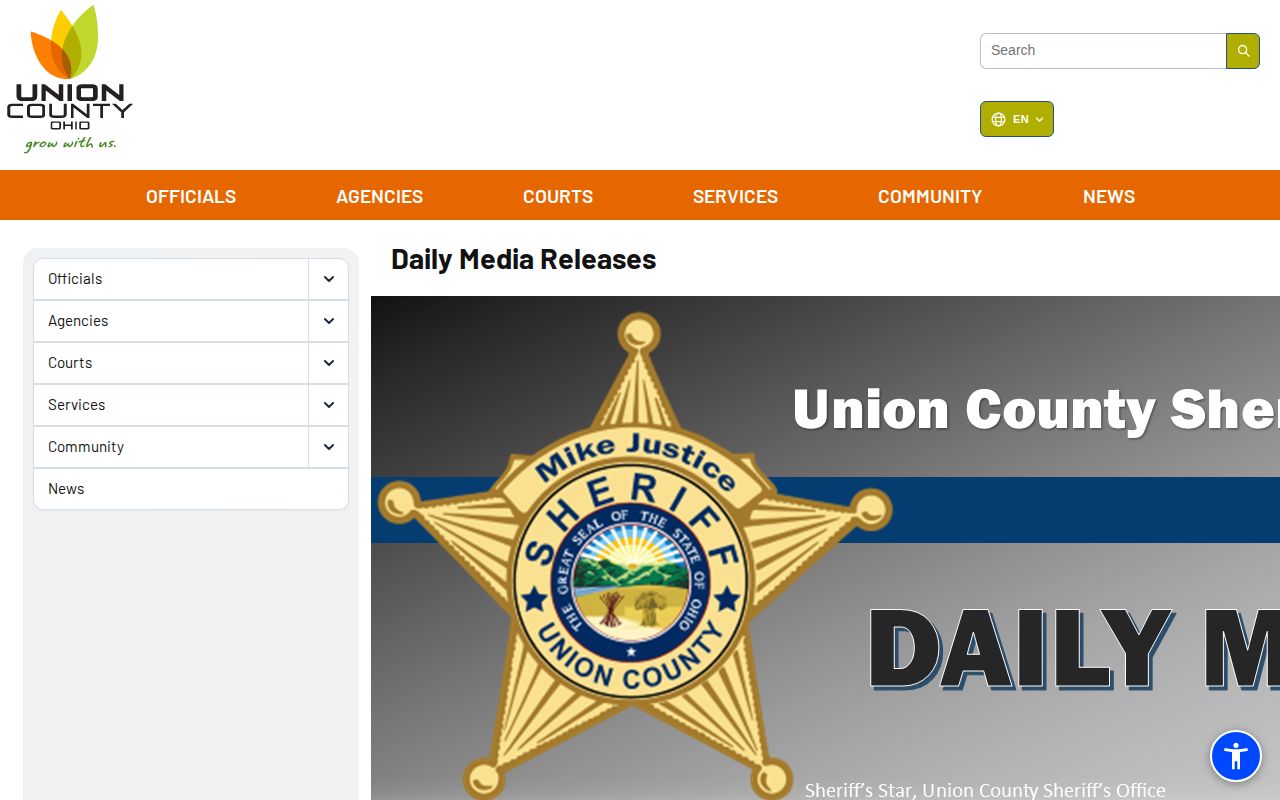
A report may draw on a police account, a court filing, or later records. It can also be corrected after posting. An archive does not show whether a person remains in custody. Check the originating agency or court for status. The Union County Sheriff's Daily Media Releases page is an official county publication stream. It may preserve selected notices rather than all bookings.
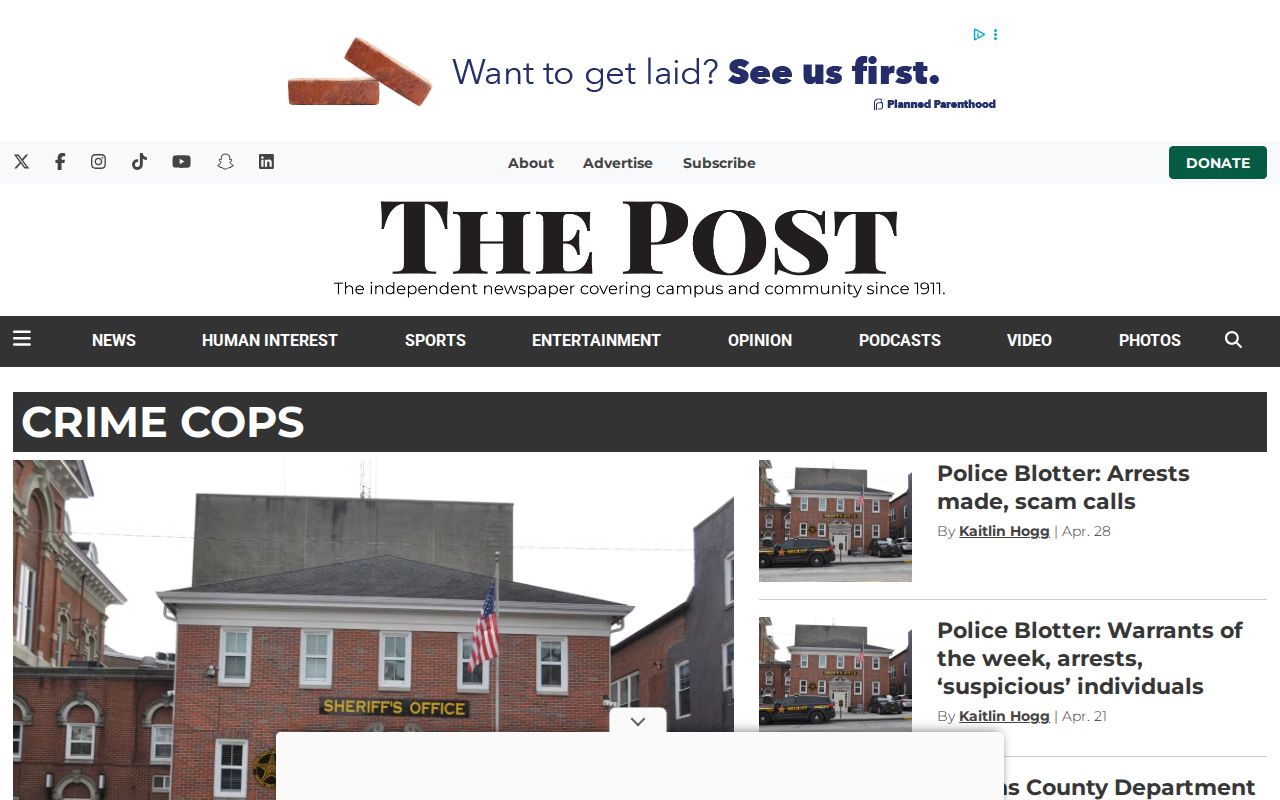
The Post's Crime Cops section is a local reporting archive. Its police-blotter headlines and story summaries can add event context. The newspaper is not the booking custodian, though, and may not reflect later corrections or case outcomes.
Weekend and Holiday Arrests
Weekend and holiday activity can reach a log on its own schedule. A county may publish a Monday roundup, a newspaper may post after a records export, and a jail vendor may refresh on its own cycle. Some releases follow an investigation rather than a booking. The patterns differ by agency.
For a new or current booking, the Ohio 24 Hour Arrests view explains how same-day and current-custody sources differ. A multi-day blotter suits an older release or a weekend roundup better. It cannot replace the jail when a current custody answer is required.
How to Find an Ohio Arrest Log
Route your search by the arresting agency and the booking facility. The Ohio County Directory is a starting point for local sources, while regional jails and city departments may keep separate archives.
- Set the likely county and date range. Use the incident location, arresting department, or case notice. For a weekend or holiday, include the days before and after the stated event date.
- Check the official county channels. Look for a sheriff’s media page, jail roster archive, or municipal police blotter. Note whether it is a booking record, incident summary, press release, or calls-for-service log.
- Check the booking facility. If the source points to a regional jail, search that facility and retain both the facility and charging-county labels.
- Use state patrol and news sources for context. Search dated OSHP bulletins or local reporting, then return to the originating agency and court to confirm the official status.
- Request a record that has aged out. Give the records custodian a person or case identifier, date range, county, and record type. Ask for the approved retention schedule if the online archive ends before the period you need.
Keep the source's exact terms. "Arrested," "charged," "cited," and "booked" each mean something different, and a citation can lead to court without any jail stay. Release itself settles nothing about a case.
| Field to record | Why it matters |
|---|---|
| Source agency or outlet | Shows who created the entry and whether it is official or secondary. |
| County and facility | Keeps the place of charge separate from the jail or regional custodian. |
| Event date and post date | Shows when the reported event occurred and when the source published it. |
| Status wording and charge | Preserves what the source actually said without turning an charge into a finding. |
| Disposition or correction link | Points to a later court outcome or an updated source when one is available. |
Older Arrest Logs and Archives
Ohio has no single retention rule. Booking photos, arrest logs, and jail records survive on varied schedules. Each local custodian works from an approved schedule. That schedule can shift if a case stays open or a legal hold applies. The Ohio History Connection's Local Government Records Program lays out the RC-1, RC-2, and RC-3 tools. The approved schedule for the sheriff, jail, police, or clerk is what truly governs each record.
One useful example comes from the draft sheriff schedule. It suggests keeping daily jail logs for three years when no action is pending. Treat that as guidance, not law. Ask for the custodian's approved schedule. This applies to arrest reports, booking entries, photos, video, and release records. Online archives can vanish. If one does, ask whether the file still exists, moved elsewhere, or was destroyed under that schedule.
Older Ohio records have a home too. The Ohio History Connection State Archives preserves historical documents from state and local governments. Its Ohio Incarceration Record Index lists Ohio Penitentiary and Reformatory admissions from 1888 through 1923. The index is incomplete. Some cards were lost or destroyed. It is not a way to search recent arrests. For newer county arrest records, go back to the local custodian.
A request under ORC § 149.43 works best with specifics. Name the agency. Give a bounded date range, and describe the record you want. If protected details appear, ask for the releasable portions, and ask whether an older file was transferred to an archive.
Note: A record-retention schedule governs the public office’s files; it does not set a news outlet’s archive policy or guarantee a web copy.