
Ohio Arrest Records: Public Access
For the most part, yes. Ohio's Public Records Act lets anyone ask a public office for records that document its work. No name is required. No reason is needed either. Booking is simply the step after an arrest. At that point a jail logs a person's identity, custody status, and basic facts. Because of that, the routine factual parts of an arrest report, booking record, jail log, or booking photograph held by an Ohio agency can fall within public reach.
Each office decides what it may release. One sheriff posts a current-custody roster, while a city police department might share selected incident news and another office answers only by request. Web pages can lag or run thin, so a name that is absent proves very little. There is no single live search covering every Ohio arrest. Not every field in a record is public.
Ohio's Public Records Act
Ohio Revised Code § 149.43 is the core access statute. It requires public offices to prepare records promptly for inspection and to provide copies within a reasonable time. No fixed number of days applies statewide. Timelines shift with the volume of records. They depend on where records sit in storage and whether protected details need review. The labor required to redact them matters too.
A good request names the record itself. Asking an office to answer a question is not enough. Nor must an agency create a report it never kept. Overbroad requests can be narrowed with the custodian's help. When part of a record is exempt, the office should release the separable remainder. It should also cite the legal basis for any denial. Copies may carry actual costs. Electronic inspection or delivery is often free. A lawful policy may add a special video-production charge.
For an Ohio arrest record, focus the request on the agency. Give the date or date range and place. Add a case number if you have one and the exact record type. Separate asks for an incident report, booking record, photo, release record, or later disposition help the office find each item. Routine factual material may be open while confidential investigative details, a source's identity, or protected victim information stays withheld. The Ohio Attorney General's Public Records Act guide lays out the statewide framework. But one sheriff's request will never pull every county, city, regional jail, and state record.
- Find the arresting agency and the office that holds the booking or jail record.
- Describe the person or event and give a narrow date range, location, and case number when known.
- Name each record sought, such as the factual arrest report, booking entry, photo, or release record.
- Ask for nonexempt parts if the office withholds a field, and request the reason in writing.
Note: A records request covers material an office already holds; it cannot force the creation of a statewide arrest database. That burden sits outside the law's reach.
Ohio's Booking-Photo Law
Under Ohio Revised Code § 2927.22, a booking photograph means an image taken in Ohio. An arresting law-enforcement agency takes the image. The statute folds that image into criminal-record information, along with identifying details like a name, address, filed charges, or physical description, whenever those details assert or imply illegal conduct. It took effect January 18, 2018.
The rule targets money. A publisher or disseminator cannot negligently ask for payment or any other benefit from the subject. Nor can it accept one. The exchange must be for removing, correcting, changing, or halting publication of covered information. Each payment sought or accepted counts as a separate first-degree misdemeanor. The statute also opens a civil path under Ohio law. It allows the greater of $10,000 or actual and punitive damages, plus reasonable attorney fees, court costs, and other remedies.
This is an anti-payment law, not a takedown order. It does not compel anyone to post a booking photo. It also does not wipe out public copies on request. Nor does it erase an accurate record on objection. Start with the agency that created the record. That covers corrections for a wrong person, wrong charge, a later dismissal, juvenile status, or a court order. The official Ohio code page for § 2927.22 displays the definition and operative rule, shown in the image below.
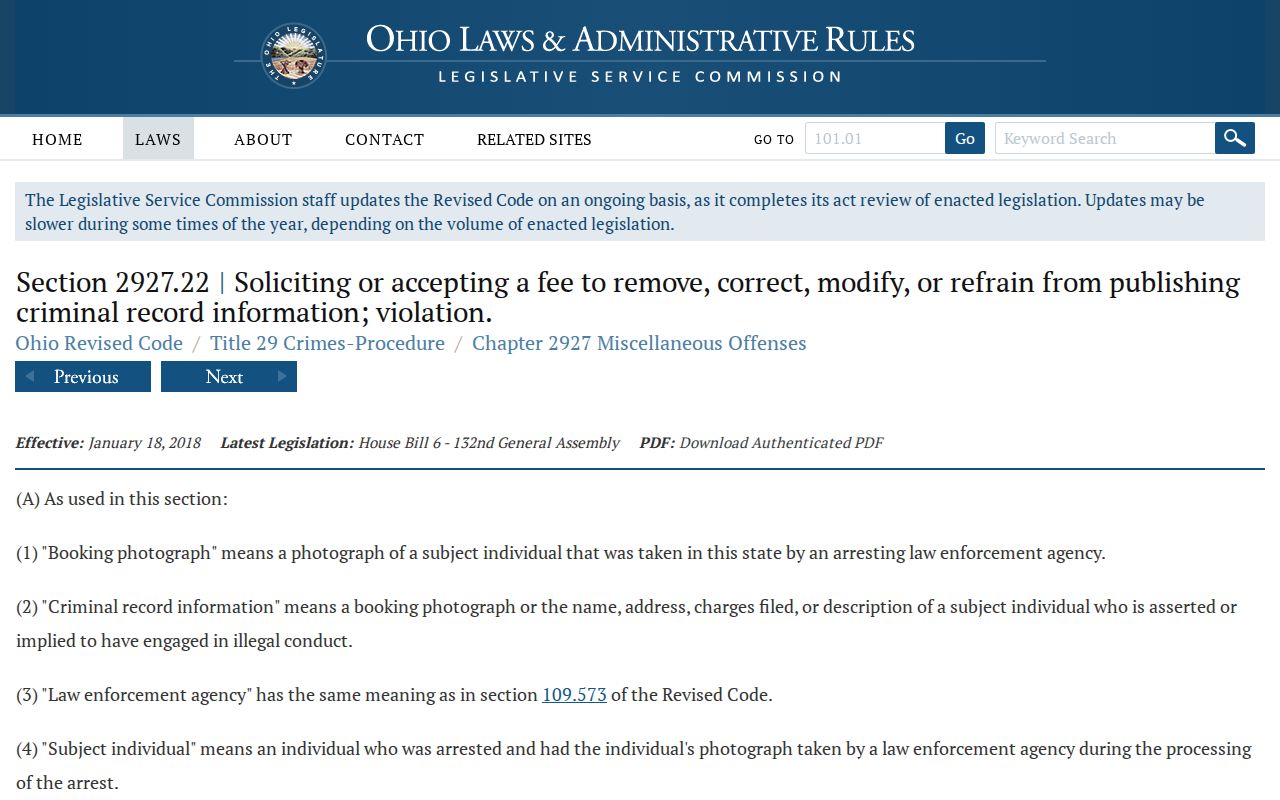
The code text caps payment demands tied to booking photos and criminal-record details. It stops well short of ordering the erasure of every public booking record.
Ohio Juvenile Arrest Records
Children get extra protection under Ohio law. Adult booking records follow looser rules. Ohio Revised Code § 2151.313 controls what happens to a child's fingerprints, photographs, and arrest or custody records. It limits when prints or photos may be taken. Retention and sharing are covered too. Age matters here. So does the alleged act, and whether a complaint or other case action follows. A juvenile arrest entry is not a roster field.
Another shield sits in Section 149.435, which restricts routine factual reports naming, or likely identifying, a child alleged to be delinquent or an abused child under 18. Statutory exceptions apply. Victim identities stay protected as well. So do confidential sources, witnesses, medical information, and details that could create a safety risk. An agency can still describe the event. It strips out names, ages, and addresses first. The official text of Ohio Revised Code § 2151.313 spells out the fingerprint and photograph rules for a child in custody.
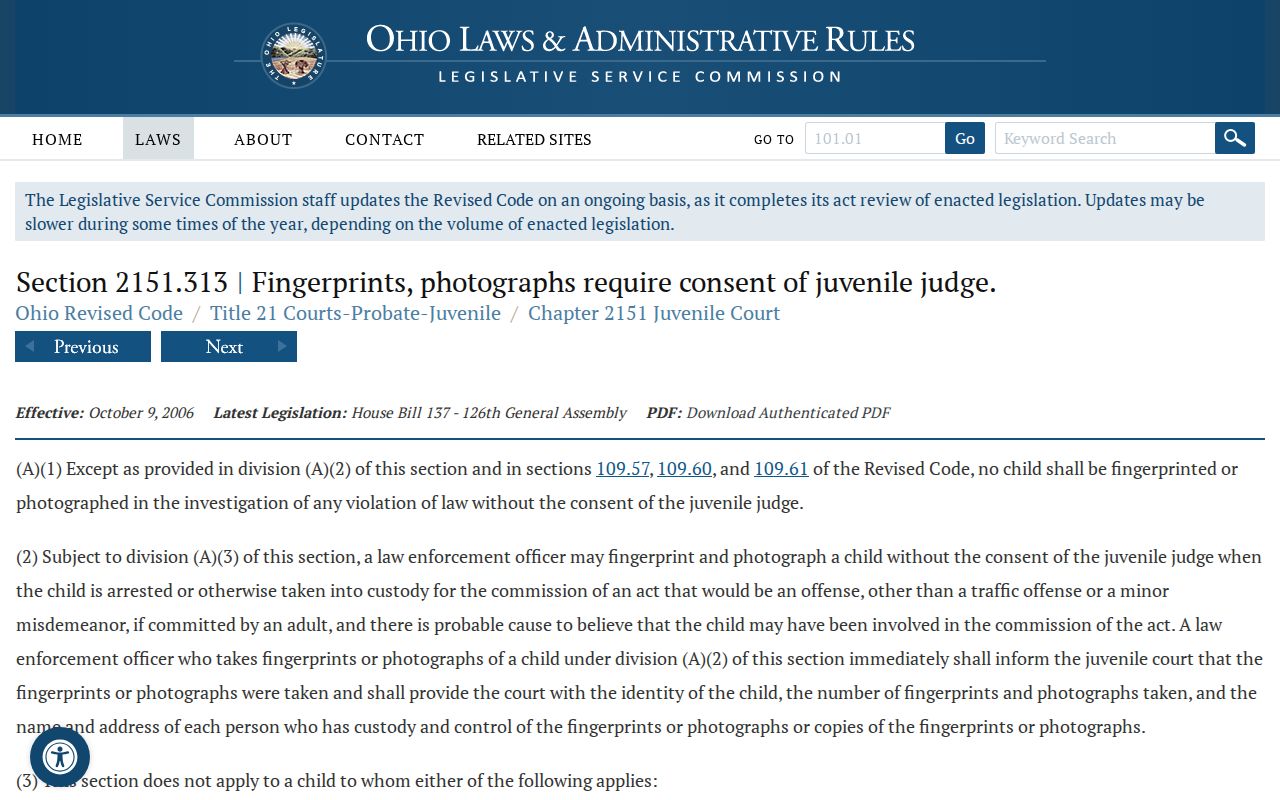
A statewide arrest search should not reproduce juvenile identities or undo a redaction. When a record is withheld, the person seeking it can ask the custodian which legal limit applies and whether any nonprotected portion can be released.
Ohio Arrest Records You Can Seek
Access starts with who made the record. A county jail roster may show current custody, while a completed booking record can remain with the jail long after a person walks free. The police report belongs to the arresting agency. The court clerk keeps the docket and outcome. None of these is a complete statewide history, and mixing them up leads people astray.
| Record holder | What to ask for | Boundary |
|---|---|---|
| Arresting police agency or sheriff | Routine factual arrest report, incident number, arrest date, and any releasable photo | Investigative, juvenile, victim, source, and safety information may be withheld or redacted. |
| County or regional jail | Booking record, current custody status, booking photo, and release record | Ohio has no one public county-jail roster; web fields and photo policies vary. |
| Municipal or county court clerk | Case docket, filed charge, hearing, and final disposition | There is no single unrestricted public search for every local Ohio court. |
| Ohio Department of Rehabilitation and Correction | State-prison custody or supervision after sentencing | ODRC is not a county booking search; a recent arrest may not appear there. |
State prison records live in one place. For ODRC custody or supervision, use the official Ohio Department of Rehabilitation and Correction Offender Search. Its results cover state corrections, not someone just booked into a county jail. A released person may drop off a current-custody page. The booking record still exists with its custodian.
County records sit in Ohio's local systems. The Ohio County Directory points a search at the right county starting point. A sheriff or jail page there may offer a roster, a dated release list, or a records contact. Court dockets run separately. Only the court record shows the disposition, meaning whether a charge was amended, dismissed, or resolved by judgment. The booking entry and the docket are different documents.
Note: Current custody, a completed booking, and a final court result are different stages recorded in separate Ohio systems.
Sealed Ohio Records and Expungement
Ohio treats sealing and expungement as different things. Sealing hides; expungement destroys. Eligibility turns on the case outcome, the offense, prior record, waiting periods, and statutory exclusions. A court order is normally required. A dismissal or acquittal alone does not erase every copy a government office or private site holds.
The Supreme Court of Ohio's adult record-sealing guide walks through the petition process. It lists sample waiting periods after final discharge. Six months for a minor misdemeanor. One year for a misdemeanor. Eleven years for eligible fourth- or fifth-degree felonies. Thirteen for an eligible third-degree felony. Those numbers promise nothing. Exclusions still apply, and later amendments matter. Traffic offenses, serious or violent offenses, sex offenses, domestic-violence categories, offenses with young victims, and theft in office all face special rules.
Sealing limits public access while preserving it for parties the law authorizes. Expungement goes further. Official records are to be destroyed, deleted, or erased beyond retrieval, with index references removed. Narrow exceptions survive. Ohio Revised Code § 2953.32 governs sealing or expungement, and § 2953.34 handles notice and implementation. The court notifies the Bureau of Criminal Investigation and known agencies under the statutory process.
A private publisher that saved an old copy gets no automatic deletion instruction. Ask the official agency or clerk first. Keep the signed order and ask each custodian to update its own record; a private page or search engine may take a separate request, and the order alone guarantees nothing there.
Correcting an Ohio Arrest Listing
Start at the source. If a name, charge, date, or custody detail is wrong, contact the agency or court that created the entry. Bring the case number or signed order. Once the official record changes, a republisher has a clear basis to fix its copy. Third-party pages lag. News stories are editorial, not booking entries. Compare any report against the originating record before sending documents.
| Route | What it can do | What to expect |
|---|---|---|
| Originating agency or court | Request correction of a factual error or implementation of a court order. | Ask the custodian to update its own record; the office may still withhold protected fields. |
| Sealing order | For an eligible case, a court order limits public access to the official record. | Eligibility and timing depend on the case and statute. Sealing does not automatically reach every private copy. |
| Expungement order | For an eligible case, the order directs official destruction or deletion under Ohio law. | Confirm that government custodians have acted, then make separate requests to lawful republishers if an old copy remains. |
| Free publisher review | RecentlyBooked's policy says it charges no fee to review a wrong person, incorrect or outdated details, dismissal, sealing or expungement, juvenile records, and duplicate entries. | Provide the exact listing URL, name, arrest date, state and county, reason, and supporting legal papers as needed. The publisher says accurate, current public records are not removed just because a person objects. |
| Newsroom correction desk | Cleveland 13 describes prompt corrections when warranted. | A correction request is not a promise that a news archive or photo will be deleted. The outlet makes its own editorial decision. |
| Search-result refresh | Google's outdated-content tool can refresh a result after the source page changes. | A refreshed search result does not change the publisher's source record. |
A free correction request works best when it stays lean. Send only what identifies the exact arrest listing and shows the error. Redact any unrelated numbers on identity documents first. Then go through a contact route the publisher has verified. Ohio newsrooms sometimes weigh a later dismissal, a sealing order, or a factual fix. That review, though, does not force an archive to change. A truthful story can stay up even after an editor looks at it. An editor's voluntary update is not the same as an agency obeying a court order.
The RecentlyBooked policy page lays out a free review route. It is not an official Ohio record source. It asks for supporting documents in some cases. Accurate, current public material generally stays put.
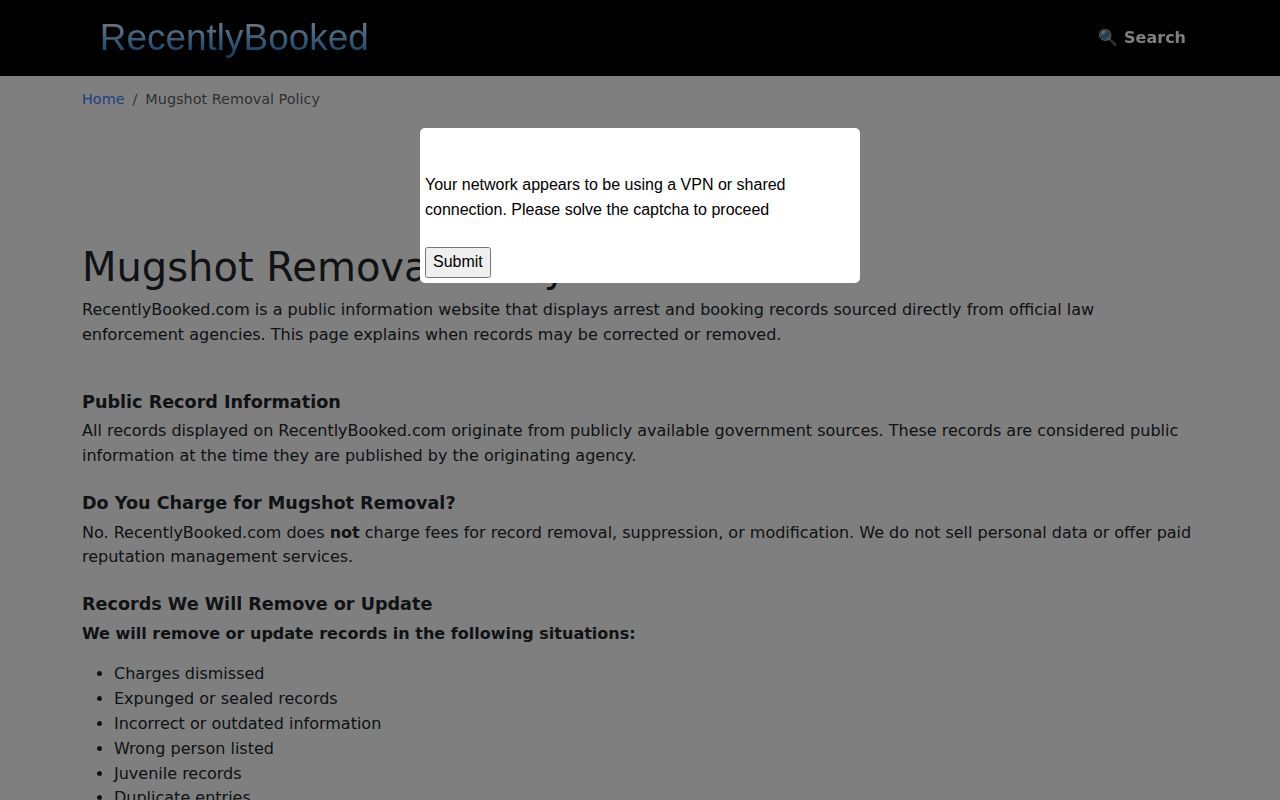
That free route lists specific grounds for review. Still, accurate and current public information may not come down just because someone asks.
Ohio Arrest Story Corrections
News outlets are editorial sources, not booking systems. When a report contains a documented error, Cleveland 13's Corrections and Updates Policy pledges prompt, noted changes. A free request can also ask a newsroom to weigh a later dismissal, sealing order, or other court outcome tied to the arrest.
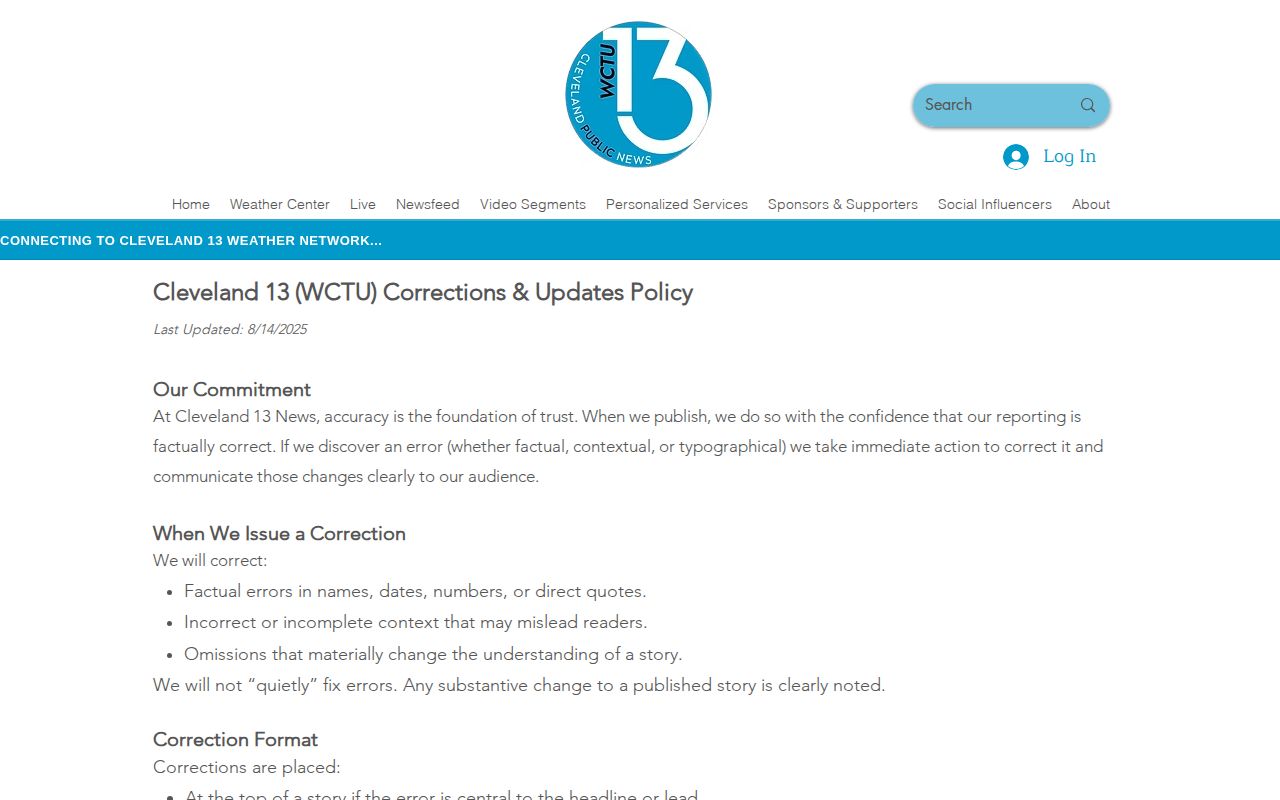
A correction policy fixes factual errors. It is not a blanket mugshot opt-out. A newsroom may weigh the arrest record, the public interest, and archive context, so removal is never guaranteed.
Old Ohio Booking Records
Ohio sets no single booking-photo retention rule for every sheriff, police department, jail, regional facility, or court. Each office follows its own approved records schedule. Those schedules can shift for a case, a legal hold, a court order, or a special statute. The Ohio History Connection's local-government records program covers the RC-1, RC-2, and RC-3 forms used in retention. A draft sheriff schedule is guidance only, not a statewide arrest rule.
For an old booking record, ask the custodian which schedule applies. Ask whether the item was destroyed or transferred. Historical corrections holdings are not a full statewide archive, and they are not a current booking search either.
Note: A missing roster entry can mean release, a system change, a redaction, or an expired display window; it does not alone prove a record was destroyed.